
Solar Panel Installation
What Causes Roof Leaks After Solar Panel Installation?
Discover what causes roof leaks after solar panel installation, warning signs to watch for, and how to prevent costly water damage.
By Aztech Roofing ·
Quick guide
- Discover what causes roof leaks after solar panel installation, warning signs to watch for, and how to prevent costly water damage.
TL;DR – Quick Guide
- Do solar panels cause roof leaks? Not necessarily. Leaks are usually associated with damaged roofing materials, unsuitable mounting details, or existing roof defects.
- Common causes: Cracked tiles, poorly waterproofed mounting points, damaged flashing, and loose brackets.
- Warning signs: Ceiling stains, damp loft insulation, mould, and leaks during heavy rainfall.
- Can leaks be repaired? Yes, many localised problems can be repaired without replacing the entire roof.
- Will panels need removing? Sometimes, particularly when damage is hidden beneath mounting equipment.
- Best prevention: Inspect the roof before installation and use competent roofing and solar professionals.
Can Solar Panels Cause Roof Leaks?
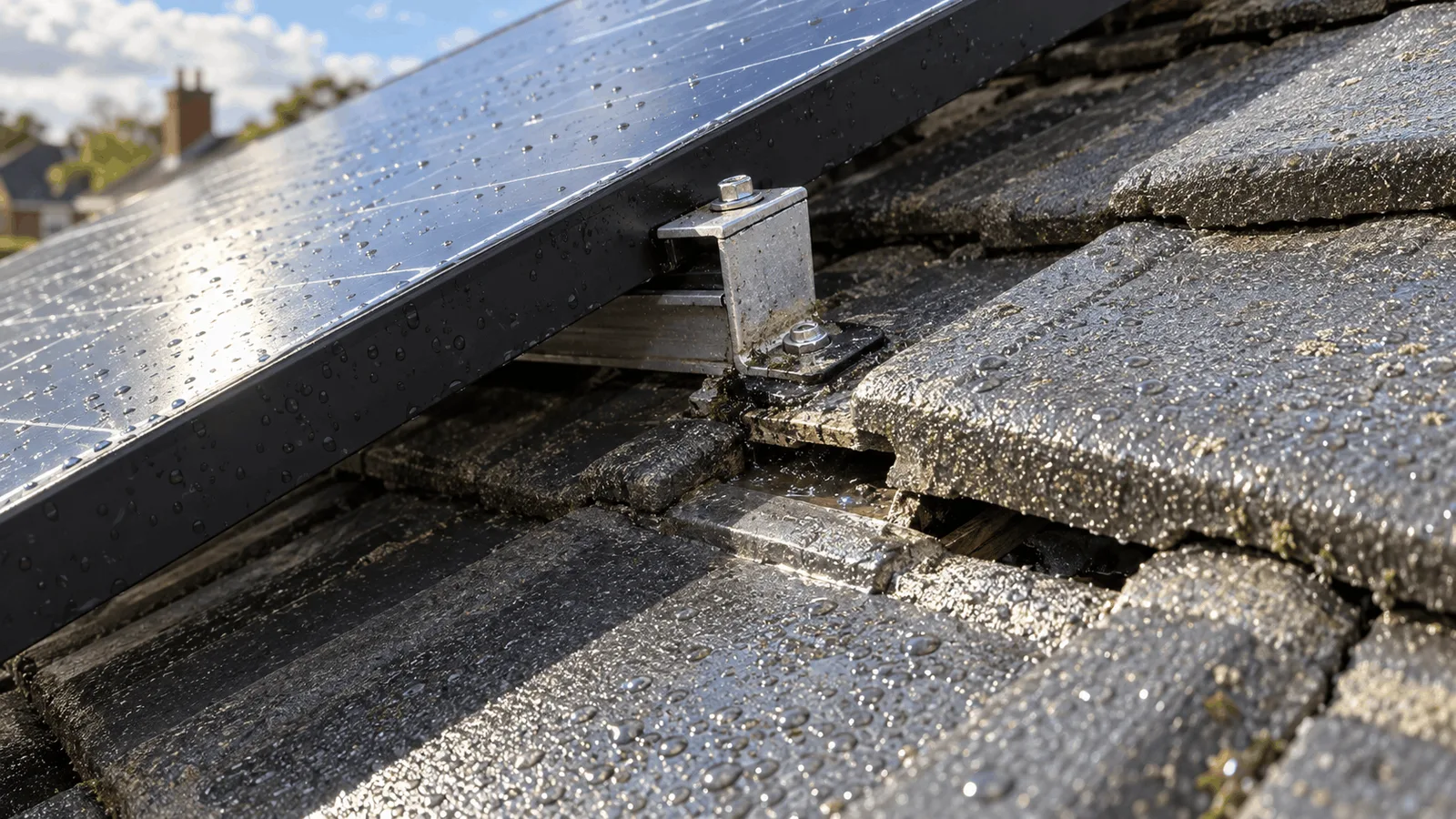
Yes, solar installations can contribute to roof leaks if mounting components or waterproofing details are installed incorrectly.
However, a properly designed installation should maintain the roof's existing weather resistance.
Most pitched-roof solar systems use brackets secured to suitable structural supports beneath the roof covering. These brackets must be positioned carefully to avoid damaging surrounding tiles or slates.
Where fixings penetrate the roof covering, compatible waterproofing details are essential.
If you're considering solar energy, Aztech Roofing's Solar Panel Installation service provides information about installing solar equipment on suitable roofs.
7 Common Causes of Roof Leaks After Solar Panel Installation
1. Poorly Waterproofed Mounting Points
Solar mounting brackets must be secured correctly without compromising the roof's waterproofing.
Some systems require penetrations through roofing materials, while others use mounting arrangements designed for specific roof coverings.
If penetrations are inadequately protected, rainwater may enter around the fixings.
Prevention tip: Ensure the mounting system uses compatible weatherproof components and follows the manufacturer's installation requirements.
2. Cracked or Broken Roof Tiles
Concrete tiles, clay tiles, and natural slates can become damaged during solar installation.
For example, excessive pressure from a poorly positioned bracket may crack a tile or prevent it from sitting correctly.
Even a small crack can allow rainwater beneath the roof covering.
Prevention tip: Inspect surrounding tiles and slates before and after installation, replacing any damaged materials.
3. Damaged or Incorrectly Installed Flashing
Flashing protects vulnerable roof junctions and helps direct rainwater away from openings.
Solar installations may require specialist flashing or integrated waterproof mounting details.
If these components are incorrectly fitted, displaced, or damaged, water can enter around mounting points.
Homeowners concerned about existing flashing can explore Aztech Roofing's Lead Work & Flashing service.
For a closer look at common defects, read the guide to Roof Flashing Repairs.
4. Loose or Incorrectly Positioned Mounting Brackets
Solar mounting brackets must remain secure under normal weather conditions, including wind loads.
Poorly positioned brackets can place unnecessary pressure on surrounding roofing materials.
Movement may also affect waterproofing connections or cause nearby tiles to shift.
Prevention tip: Use mounting components suitable for the roof type and ensure the installation is properly assessed.
5. Existing Roof Damage
Not every leak appearing after solar installation is caused by the panels.
A roof may already have cracked tiles, deteriorated underlay, damaged valleys, or defective chimney flashing.
These problems can become more noticeable during heavy rainfall, particularly if the roof wasn't inspected before installation.
Aztech Roofing's guide to the Common Causes of Roof Leaks explains other roofing defects that may allow water into a property.
6. Poorly Installed Roof Penetrations
Some solar installations involve cables or other components passing through the roof.
These penetrations require suitable weatherproof detailing.
Incorrectly positioned cable entries or poorly sealed openings can create additional routes for water to enter.
Prevention tip: Ensure roof penetrations are properly designed, installed, and checked before the solar system is commissioned.
7. Inadequate Roof Preparation
Installing solar panels without assessing the roof's condition can lead to avoidable complications.
Older roofs may contain weakened battens, damaged flashing, or roofing materials nearing the end of their useful life.
Once panels are installed, accessing these areas may become more difficult.
Prevention tip: Arrange a roof assessment and complete necessary repairs before solar installation.
What Are the Warning Signs of Solar Panel Roof Leaks?
Roof leaks after solar panel installation aren't always immediately obvious.
Water can travel along roofing underlay or timber before becoming visible inside the property.
Look for these warning signs:
- Ceiling stains: Brown or yellow patches appearing after rainfall.
- Damp loft insulation: Moisture collecting beneath the solar panel area.
- Musty smells: Persistent dampness in roof spaces.
- Mould growth: Possible evidence of ongoing moisture problems.
- Visible tile damage: Cracked or displaced roof coverings near mounting points.
- Leaks during storms: Water entry that becomes noticeable during heavy or wind-driven rain.
These symptoms can also result from condensation or unrelated roofing defects.
A professional inspection can help identify the actual source.
How Do You Fix Roof Leaks After Solar Panel Installation?
The correct repair depends on where water is entering and what caused the problem.
Minor leaks may only require localised repairs.
However, problems hidden beneath solar panels can require temporary removal of equipment to access the affected area.
Roofing repairs and electrical solar work should be coordinated by appropriately competent professionals.
Aztech Roofing's Roof Repairs service is relevant for homeowners dealing with damaged roofing materials, leaks, or other defects.
Will Solar Panels Need to Be Removed to Repair a Roof Leak?
Not always.
If the damaged area is accessible, some repairs can be completed without removing solar panels.
However, temporary removal may be necessary when:
- Flashing defects are concealed beneath panels.
- Mounting brackets require adjustment or replacement.
- Tiles or slates beneath the array are damaged.
- Underlay or other roofing materials need substantial repairs.
- The source of the leak cannot be accessed safely.
Solar panels can remain electrically hazardous in daylight, even when parts of the system are switched off.
Homeowners should never attempt to disconnect, lift, or remove solar equipment themselves.
How Much Does It Cost to Fix a Roof Leak After Solar Installation?
The cost of repairing roof leaks after solar panel installation depends on the extent of the damage and accessibility.
Several factors influence the final price:
- Type of damage: Replacing a cracked tile may cost less than renewing extensive flashing.
- Leak location: Problems beneath solar panels may require additional work.
- Panel removal: Temporary removal and reinstallation can increase labour costs.
- Roof accessibility: Steep or complex roofs may require scaffolding.
- Underlying damage: Wet insulation, deteriorated timbers, or damaged underlay may need attention.
Before agreeing to repairs, request a quotation explaining the suspected cause, proposed solution, and whether solar equipment needs to be removed.
If the leak appeared shortly after installation, contact the original installer promptly and check the relevant workmanship warranties.
How Can You Prevent Roof Leaks After Solar Panel Installation?
Prevention starts before the first mounting bracket is installed.
Follow these practical steps:
- Inspect the roof first: Identify cracked tiles, deteriorated flashing, and existing leaks.
- Complete necessary repairs: Fix damaged roofing materials before installing panels.
- Choose suitable mounting equipment: Different roof coverings require compatible fixing systems.
- Protect roof penetrations: Ensure flashing and waterproofing details are correctly installed.
- Check surrounding tiles: Confirm roofing materials remain correctly positioned after installation.
- Maintain the roof: Arrange inspections when damage is suspected, especially after severe weather.
For homeowners preparing for solar work, Aztech Roofing's Free Roof Inspections page provides a starting point for assessing the roof's condition.
When Should You Call a Roofing Professional?
If you notice damp patches, damaged tiles, or recurring leaks after installing solar panels, arrange an inspection rather than waiting for the problem to worsen.
A roofing professional can assess the surrounding roof coverings, flashing, and visible mounting details.
Where the investigation involves electrical components or panel removal, competent solar professionals should also be involved.
Prompt action can help prevent moisture from reaching insulation, timber, and internal finishes.
Key Takeaways
Understanding the causes of roof leaks after solar panel installation helps homeowners protect their roofs and avoid unnecessary repair costs.
- Solar panels don't automatically cause leaks when properly installed.
- Cracked tiles, unsuitable mounting details, and defective flashing are common potential causes.
- Existing roof damage may become noticeable after solar installation without being caused by the panels.
- Damp ceilings, wet insulation, and recurring leaks are important warning signs.
- Many localised defects can be repaired without replacing the entire roof.
- Some repairs require temporary solar panel removal to access concealed damage.
- Roof inspections and suitable installation methods help reduce the risk of future leaks.
If you're experiencing water damage or planning a solar installation, Aztech Roofing can help you explore suitable roofing repairs and solar solutions.
Solar panels should help lower your energy bills—not create a new roofing problem every time it rains.
FAQs
Are roof leaks after solar panel installation common?
Roof leaks are not an inevitable result of installing solar panels. Problems can occur when roofing materials are damaged, mounting components are installed incorrectly, or existing roof defects remain unresolved. Proper roof preparation and suitable waterproofing help reduce the risk.
Can solar panels cause roof leaks even if the tiles look fine?
Yes, water may enter through defective mounting penetrations or flashing even when surrounding tiles appear undamaged. Some waterproofing problems are concealed beneath the solar array and cannot be seen from the ground. A professional inspection can help locate the source of the leak.
Who is responsible for roof leaks after solar panel installation?
Responsibility depends on the cause of the leak, the installation contract, and any applicable warranties. If the leak resulted from defective solar installation work, the installer may be responsible for putting it right. Homeowners should document the damage and contact the installer before arranging unrelated repairs where practical.
Can roof leaks after solar panel installation be repaired without removing the panels?
Some leaks can be repaired without removing solar panels when the affected area is accessible. However, concealed mounting defects, damaged tiles beneath the array, or faulty flashing may require temporary panel removal. Competent professionals should handle any necessary electrical isolation and solar equipment work.
Should I get a roof inspection before installing solar panels?
Yes, a roof inspection can identify damaged tiles, deteriorated flashing, existing leaks, and potential structural concerns. Completing necessary repairs before installation can prevent more complicated work later. It also helps confirm whether the roof is suitable for the proposed solar mounting system.
Related reading
Explore local roofing help
A guide cannot diagnose a specific roof. Explore our services and local coverage, or arrange a free inspection.
Need advice on your roof?
Start with a free inspection and a clear explanation of the options.