
Roof Repairs
Can Cracked Roof Tiles Cause Leaks During Heavy Rain?
Heavy rain has a way of exposing roofing problems that have gone unnoticed for months. A small crack in a roof tile might seem harmless during dry weather, but when persistent rainfall, strong winds and changing temperatures come into play, that seemingly minor defect can become a serious concern.
By Aztech Roofing ·
Quick guide
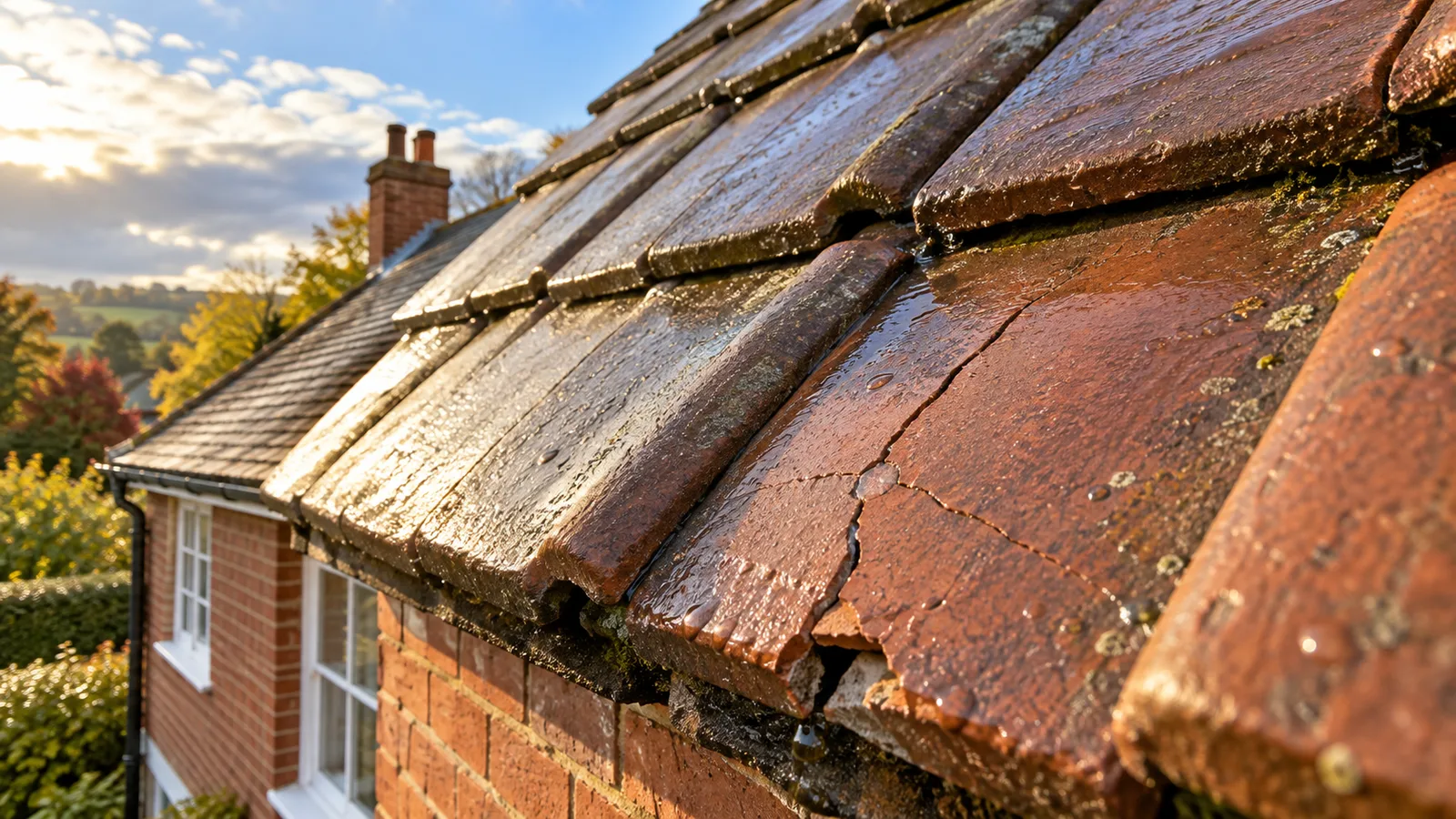
Yes, cracked roof tiles can cause leaks during heavy rain, especially when prolonged rainfall or strong winds allow water to penetrate beneath the roof covering. While one damaged tile does not always result in an immediate leak, leaving it unrepaired increases the risk of moisture entering the roof structure.
- Cracked roof tiles weaken weather protection. Water can travel through cracks or beneath damaged tiles during persistent rainfall.
- Heavy rain increases the risk. Wind-driven rain can reach vulnerable areas that remain relatively dry during lighter showers.
- Leaks may not appear immediately. Roofing underlay can temporarily redirect moisture, meaning visible damage may develop later.
- Warning signs should not be ignored. Damp patches, ceiling stains, mould and dripping water may indicate water ingress.
- Early repairs can prevent further damage. Replacing individual cracked roof tiles may be sufficient when the surrounding roofing materials remain in good condition.
- Professional inspections help identify the cause. A qualified roofer can determine whether cracked tiles, damaged flashing or another roofing defect is responsible.
The important takeaway is that cracked roof tiles should be investigated promptly, even if there are no obvious signs of an indoor leak. Early attention can prevent a manageable roofing issue from developing into a much larger problem.
Introduction
So, can cracked roof tiles cause leaks during heavy rain? Absolutely. Cracked roof tiles can allow water to pass beneath the roof covering, particularly when wind-driven rain forces moisture through damaged areas. Although the roofing underlay may provide an additional layer of protection, it is not always enough to prevent water from eventually entering the property.
For homeowners in Worcester and the surrounding West Midlands, understanding how cracked roof tiles affect roof performance can help prevent avoidable damage to ceilings, insulation and internal structures.
At Aztech Roofing, we understand the importance of identifying roofing problems before they develop into costly repairs. Knowing what to look for, when to act and how cracked roof tiles are repaired can make a significant difference in protecting your home.
How Do Cracked Roof Tiles Cause Leaks During Heavy Rain?
Roof tiles form the outer protective covering of a pitched roof. Their overlapping arrangement is designed to shed rainwater down the roof slope and towards the guttering system.
When a tile becomes cracked, this protective arrangement may be compromised.
During light rainfall, water may continue to run over the tile without penetrating the damaged section. However, during heavy or prolonged rainfall, water can enter through the crack or be driven beneath the tile by strong winds.
Several factors influence whether cracked roof tiles cause leaks:
- Crack size and position: A deep crack extending across the tile may allow more water through than a superficial surface mark.
- Roof pitch: Lower-pitched roofs can be more vulnerable to wind-driven rain, particularly where tiles are installed close to their minimum recommended pitch.
- Rainfall intensity: Persistent rainfall increases the amount of water reaching damaged roofing materials.
- Wind direction: Strong winds can force rain beneath overlapping tiles and into exposed joints.
- Underlay condition: Ageing, torn or incorrectly installed underlay may be less effective at redirecting water away from vulnerable areas.
Importantly, water entering through cracked roof tiles does not always drip directly beneath the damaged tile. Moisture can travel along battens, underlay or structural components before becoming visible inside the property.
This is one reason why locating the exact source of a roof leak can be more complicated than identifying the nearest damaged tile.
What Causes Roof Tiles to Crack?
Understanding why cracked roof tiles develop can help homeowners recognise potential roofing problems before severe weather arrives.
1. Ageing and Weather Exposure
Roof tiles experience years of exposure to rainfall, sunlight, frost and temperature changes.
Over time, some roofing materials may become more vulnerable to cracking, particularly if they have already suffered surface deterioration or physical damage.
Clay and concrete tiles can have long service lives, but their durability depends on material quality, installation, environmental conditions and maintenance.
2. Freeze-Thaw Damage
During colder weather, moisture can enter small openings or porous sections of a tile.
If that moisture freezes, it expands and may place additional stress on the material. Repeated freezing and thawing can gradually enlarge existing weaknesses.
This process is particularly relevant to tiles that are already damaged or deteriorating.
3. Storms and Falling Debris
Strong winds can dislodge branches, move unsecured objects or cause debris to strike the roof.
The resulting impact may crack or break individual tiles.
Storms can also loosen roofing materials, creating additional openings through which rainwater may enter.
4. Foot Traffic and Accidental Damage
Walking on a tiled roof without suitable access equipment, training and precautions can damage roofing materials.
Certain tiles may crack under concentrated weight, especially when they are older, brittle or inadequately supported.
Homeowners should avoid walking on the roof to inspect or replace damaged tiles themselves.
5. Previous Installation Problems
Incorrect installation can contribute to premature tile damage.
Poor fixing methods, unsuitable tile selection, inadequate support or incorrect overlapping arrangements may increase the likelihood of roofing defects.
A professional inspection can help establish whether cracked roof tiles are isolated defects or symptoms of a wider installation issue.
What Are the Warning Signs of a Leak from Cracked Roof Tiles?
Not every cracked tile causes immediate water ingress. However, several warning signs can indicate that moisture is entering the roofing system.
Water Stains on Ceilings or Walls
Brown or yellowish stains may indicate that water has entered the roof space and reached internal surfaces.
These marks can become more noticeable after heavy rainfall.
However, staining does not automatically confirm that cracked roof tiles are responsible, as flashing defects and other roofing problems can produce similar symptoms.
Damp Insulation or Roof Timbers
Moisture inside the loft may indicate water entering through the roof covering.
Damp insulation can lose some of its thermal effectiveness, while persistent moisture may contribute to timber deterioration.
Where accessible and safe, homeowners can look for visible dampness from inside the loft without disturbing insulation, wiring or structural components.
Dripping Water During Rainfall
Water dripping through the ceiling or into the loft during heavy rain is a clear indication that further investigation is needed.
The entry point may be located some distance from where the water becomes visible.
Mould or Musty Odours
Persistent moisture can create conditions that encourage mould growth.
A musty smell in the loft or upstairs rooms may indicate a ventilation problem, condensation or water ingress.
Because these issues can have different causes, identifying the source is essential before deciding on repairs.
Visible Tile Damage
Cracked, broken, displaced or missing roof tiles can sometimes be seen from ground level.
However, not every defect is visible from the street or garden.
If you notice any of these warning signs, arranging professional Roof Repairs can help establish the extent of the damage and determine the most appropriate solution.
Can One Cracked Roof Tile Cause a Serious Leak?
Yes, a single cracked roof tile can potentially cause significant water ingress, depending on its position, the extent of the damage and the condition of the surrounding roofing materials.
For example, a cracked tile near a roof valley, junction or other area exposed to concentrated water flow may create a greater risk than a minor surface crack elsewhere.
However, the relationship between tile damage and water leakage is not always straightforward.
Some roofs have underlay that successfully redirects small amounts of penetrating rainwater towards the eaves. Others may have ageing or damaged underlay that offers less protection.
This means two homes with similar-looking cracked roof tiles can experience very different outcomes during the same storm.
The safest approach is not to assume that one cracked tile is harmless simply because no water has appeared indoors.
What Should You Do If Cracked Roof Tiles Start Leaking?
Discovering water entering your home during heavy rainfall can be stressful, but taking sensible precautions can help reduce additional damage.
Step 1: Protect the Interior
If water is dripping into a room, place a suitable container beneath the leak where safe.
Move furniture, electrical equipment and valuable belongings away from affected areas.
Avoid touching electrical fittings or wiring near water. If electrical systems may be affected, seek appropriate professional assistance.
Step 2: Avoid Climbing Onto the Roof
Wet roofing materials are slippery, and cracked roof tiles can become unstable underfoot.
Attempting repairs during heavy rainfall or strong winds creates unnecessary risks.
Roof inspections and repairs at height should be left to suitably trained professionals using appropriate safety equipment.
Step 3: Record Visible Damage
Take photographs of ceiling stains, dripping water or visible tile damage from a safe location.
Record when the leak appeared and whether it becomes worse during particular weather conditions.
This information can help a roofing professional investigate the problem.
Step 4: Arrange Prompt Assistance
If water is actively entering the property, the situation may require more immediate attention than a routine roofing appointment.
Our Urgent Roof Repairs service addresses issues such as storm-related damage and active leaks, with temporary weatherproofing considered where suitable and safe.
The priority is to assess the problem, limit further water ingress where possible and identify the permanent repairs needed.
Are Cracked Roof Tiles Always the Main Cause of Roof Leaks?
Although cracked roof tiles are a common concern, they are not the only potential source of water ingress.
Roofing systems contain several components that work together to keep rainwater outside.
Other possible causes include:
- Damaged or deteriorated flashing around chimneys and roof junctions
- Blocked or defective roof valleys
- Missing or displaced tiles
- Deteriorated roofing underlay
- Faulty junctions around roof windows
- Damaged ridge or hip details
- Defective guttering that allows water to affect vulnerable areas
For a more detailed explanation of these issues, our guide to the Common Causes of Roof Leaks explores how different roofing defects can lead to water entering a property.
Identifying the correct cause matters because replacing a cracked tile will not resolve a leak caused by defective flashing or another roofing component.
What Is the Difference Between Cracked and Slipped Roof Tiles?
Cracked roof tiles and slipped roof tiles can both compromise weather protection, but they represent different types of damage.
Cracked roof tiles remain in position but have fractures that may allow water to penetrate the material or reach vulnerable areas beneath the roof covering.
Slipped roof tiles have moved from their intended position, potentially exposing gaps in the overlapping tile arrangement.
A tile may slip because of failed fixings, deteriorated battens, storm damage or installation problems.
Both conditions can allow rainwater to enter the roofing system, particularly during strong winds and heavy rainfall.
Our guide on Slipped Roof Tiles explains the warning signs and why displaced roofing materials should be assessed promptly.
The important distinction is that cracked tiles may require replacement, while slipped tiles may need repositioning, replacement or repairs to the supporting components, depending on their condition.
How Are Cracked Roof Tiles Repaired?
The appropriate repair depends on the tile material, the severity of the crack and the condition of the surrounding roof.
Replacing Individual Damaged Tiles
When damage is limited to one or several tiles, replacing the affected units may be the most practical solution.
A roofer will typically assess the damaged area, check nearby materials and determine whether compatible replacement tiles can be fitted safely.
The replacement must maintain the correct overlap and fixing arrangement for the roofing system.
Checking the Roofing Underlay
If water has entered beneath cracked roof tiles, the underlay may also need assessment.
Tears, deterioration or poorly formed details can affect its ability to redirect water.
Where necessary, the roofer may recommend additional work to restore the roof's weather resistance.
Inspecting Battens and Supporting Components
Roof battens provide support and fixing points for many tiled roofing systems.
If moisture has affected these components, their condition should be checked before the repair is completed.
Damaged or deteriorated supporting materials may need replacement.
Addressing Wider Roofing Problems
Sometimes, multiple cracked roof tiles indicate a more extensive issue.
Widespread deterioration, repeated leaks or problems with the underlying roof structure may require a broader repair plan.
However, a complete roof replacement is not automatically necessary simply because several tiles are cracked.
A proper assessment helps determine whether targeted repairs are sufficient.
Can You Prevent Cracked Roof Tiles from Causing Leaks?
While no roofing system is completely immune to weather damage, regular maintenance can help identify problems before they become serious.
Inspect the Roof After Severe Weather
After strong winds or storms, look for visible changes from ground level.
Pay attention to missing tiles, displaced roofing materials and debris that may have struck the roof.
Avoid attempting to access difficult or elevated areas yourself.
Investigate Small Leaks Early
Minor water stains or occasional dripping should not be ignored.
A small leak may indicate a localised defect that can be repaired before moisture affects a larger area.
Waiting until the next period of heavy rainfall can allow an existing problem to worsen.
Keep Drainage Areas Clear
Blocked gutters and roof valleys can interfere with normal rainwater drainage.
Keeping these areas clear through safe, appropriate maintenance helps reduce the risk of water accumulating around vulnerable roofing details.
Arrange Professional Roof Inspections
Some cracks and defects cannot be identified reliably from ground level.
Professional inspections can assess visible tile damage alongside flashings, junctions, drainage and other accessible roofing components.
Our Free Roof Inspections provide homeowners with an opportunity to have roofing concerns assessed and understand what work, if any, may be required.
A professional assessment is particularly useful when a property has experienced repeated leaks, storm damage or unexplained damp patches.
When Should Cracked Roof Tiles Be Treated as Urgent?
Not every cracked tile requires emergency attendance, but certain situations justify prompt professional attention.
These include active water entering occupied rooms, multiple damaged tiles following a storm, visible openings in the roof covering or water affecting electrical installations.
A cracked tile without visible internal leakage should still be assessed within a reasonable timeframe, particularly when further heavy rain is expected.
The urgency depends on the severity of the defect, weather conditions, property exposure and evidence of water ingress.
Acting early can help protect the roof structure and reduce the likelihood of additional interior damage.
Key Takeaways
Cracked roof tiles may appear to be a minor maintenance issue, but heavy rainfall can expose weaknesses in the roof covering and allow moisture to reach vulnerable areas beneath it.
Although not every cracked tile causes an immediate leak, the potential consequences of leaving damage unattended should not be underestimated.
The main points to remember are:
- Cracked roof tiles can cause leaks during heavy rain, particularly when rainfall is persistent or driven by strong winds.
- Water damage may develop gradually, even when the initial crack appears small.
- Roofing underlay provides additional protection, but it should not be relied upon to compensate indefinitely for damaged tiles.
- Visible dampness, ceiling stains and dripping water require investigation to identify the true source.
- Individual tile replacement may be sufficient when the surrounding roof remains in good condition.
- Regular inspections and timely maintenance can help identify problems before they become more extensive.
Ultimately, cracked roof tiles should be treated as an early warning sign rather than something to ignore until water appears indoors.
Understanding the risks and arranging suitable repairs can help keep your home protected through heavy rainfall and changing UK weather conditions.
FAQs
Can cracked roof tiles cause leaks even if the crack is small?
Yes, even small cracks can allow water to penetrate a roof tile during prolonged or wind-driven rainfall. The likelihood of a leak depends on the crack's position, the roof pitch and the condition of the underlying materials. A professional assessment can determine whether the tile needs replacing.
How quickly should cracked roof tiles be repaired?
Cracked roof tiles should be assessed promptly, particularly when heavy rain is forecast or signs of water ingress are already present. An isolated crack without an active leak may not require emergency repairs, but delaying attention can increase the risk of further damage. If water is entering the property, urgent professional assistance may be necessary.
Can cracked roof tiles cause damage to loft insulation?
Yes, water entering through cracked roof tiles can reach loft insulation if it passes through the roof covering and underlay. Wet insulation may lose thermal effectiveness and contribute to damp conditions within the roof space. Identifying and repairing the source of moisture is essential before addressing affected insulation.
Do cracked roof tiles always need to be replaced?
Cracked roof tiles often require replacement when the fracture affects their ability to shed rainwater effectively. The appropriate solution depends on the tile material, extent of damage and overall condition of the roof. A roofing professional can assess whether individual replacement or more extensive repairs are necessary.
Can heavy rain cause an existing crack in a roof tile to become worse?
Heavy rain can expose existing weaknesses and allow moisture to enter cracks, although rainfall alone does not necessarily enlarge every fracture. Repeated temperature changes, freezing conditions and physical movement may contribute to further deterioration over time. Addressing cracked roof tiles early helps reduce the risk of leaks during future periods of severe weather.
Related reading
Explore local roofing help
A guide cannot diagnose a specific roof. Explore our services and local coverage, or arrange a free inspection.
Need advice on your roof?
Start with a free inspection and a clear explanation of the options.