Flat & EPDM Roofs
EPDM vs Felt Roofing: Which Is Better for a Garage Roof?
Your garage roof might not get as much attention as the rest of your property, but it still has an important job. Whether you're storing tools, protecting your vehicle or using the space as a workshop, a reliable roof keeps your belongings protected from the unpredictable British weather.
By Aztech Roofing ·
Quick guide
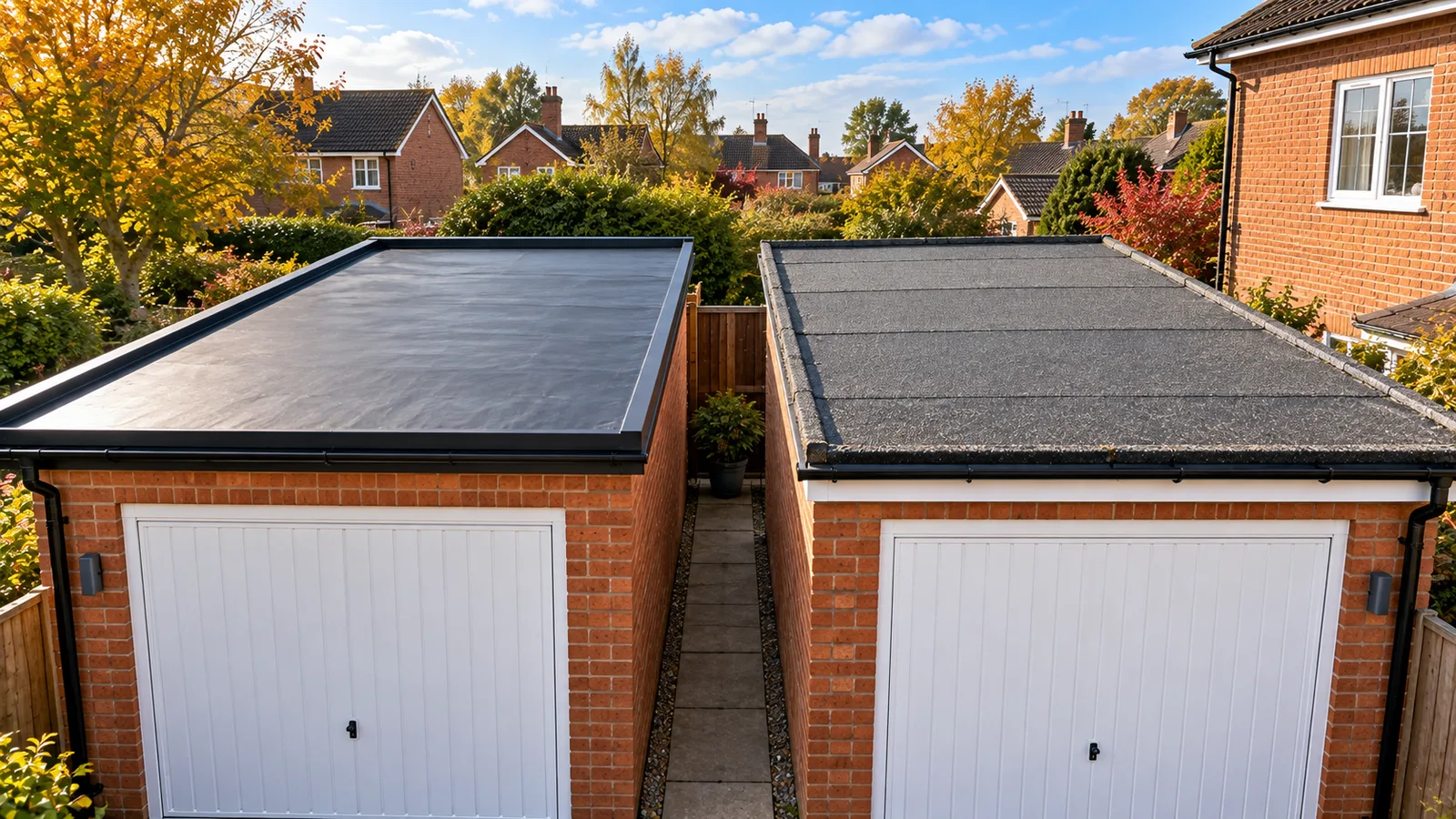
EPDM vs felt roofing: which is better for a garage roof? EPDM is often a strong choice for homeowners prioritising long-term durability, flexibility and relatively low maintenance. Modern felt roofing can also provide reliable protection, particularly when installed as a suitable multi-layer system by experienced professionals.
- Lifespan: Properly installed EPDM can potentially last 40–50 years or longer, while modern felt systems commonly have shorter expected service lives, often around 15–30 years depending on specification.
- Installation cost: Felt may offer a lower initial cost in some circumstances, although prices depend on the system, roof condition and installation method.
- Durability: EPDM offers excellent flexibility, while reinforced felt systems can provide robust waterproofing when correctly installed.
- Maintenance: Both systems benefit from periodic checks, drainage maintenance and prompt attention to damage.
- Weather resistance: Both can withstand UK weather when correctly specified, detailed and maintained.
- Repairs: Localised damage to either material may be repairable using suitable compatible methods.
- Long-term value: EPDM may offer advantages where extended service life is a priority, but the complete installation cost must be considered.
For many residential garage roofs, EPDM is worth serious consideration because of its potential longevity and flexible membrane construction. However, a properly specified felt roof can also be a suitable solution, particularly where existing roof conditions or project requirements favour that system.
Introduction
When the time comes to repair or replace a flat garage roof, one of the most common decisions is EPDM vs felt roofing. Both materials are widely used for flat roofing, but they differ in durability, installation methods, maintenance requirements and long-term value.
EPDM rubber roofing is known for its flexibility and potential to last several decades, while modern felt roofing systems offer established waterproofing performance and can be a practical option for different budgets and roof designs.
For homeowners in Worcester and the surrounding West Midlands, choosing between these materials involves more than comparing installation prices. Roof condition, drainage, expected lifespan and installation quality all influence which system is most suitable.
At Aztech Roofing, we understand the importance of selecting roofing materials that suit the property and provide dependable weather protection. This guide compares EPDM and felt roofing to help you make an informed decision before replacing your garage roof.
What Is EPDM Roofing?
EPDM stands for ethylene propylene diene monomer, a synthetic rubber material used to waterproof flat and low-slope roofs.
It is commonly installed on garages, home extensions, garden buildings and other suitable structures.
Unlike traditional multi-layer felt systems, EPDM often uses a single-ply rubber membrane to form the main waterproofing layer.
Depending on the roof dimensions, the membrane may be installed in a large continuous sheet, reducing the number of field seams required.
How EPDM Roofing Works
EPDM is installed as part of a complete roofing system that includes the supporting roof deck, appropriate bonding or fixing methods, perimeter details and drainage arrangements.
The rubber membrane creates a flexible waterproof covering that helps prevent rainwater entering the structure.
Its elasticity allows it to accommodate a degree of normal temperature-related movement without behaving like a rigid roofing material.
However, the performance of the finished roof depends heavily on correct installation around edges, outlets, walls and penetrations.
Our Flat & EPDM Roofs service covers suitable flat roof installations, repairs and replacements, including garage roofing projects.
For qualifying EPDM installations, our 20-year guarantee provides additional reassurance, subject to the applicable terms. This guarantee should not be confused with the membrane's potential overall lifespan.
What Is Felt Roofing?
Felt roofing is a waterproofing system traditionally used on flat and low-slope roofs.
Modern roofing felt is generally manufactured using bitumen-based materials reinforced with suitable carriers, such as polyester or glass fibre.
It is important to distinguish modern reinforced felt systems from older roofing felt products, as their performance and installation requirements can differ considerably.
How Felt Roofing Works
A felt roof commonly consists of multiple waterproofing layers installed over a suitable roof deck.
Depending on the selected system, the layers may be bonded using heat-applied, cold-applied or self-adhesive methods.
The completed covering is designed to form a weather-resistant barrier that directs rainwater towards the roof's drainage points.
Correct installation is essential, particularly around overlaps, edges and roof penetrations.
Modern felt roofing can provide effective waterproofing, but its long-term performance depends on material specification, installation quality and maintenance.
EPDM vs Felt Roofing: Which Lasts Longer?
Lifespan is one of the most important considerations when comparing EPDM vs felt roofing.
A garage roof may be relatively small, but replacing it can still involve significant costs for materials, labour, access and any necessary repairs to the roof deck.
Choosing a system with a longer potential service life may help reduce the frequency of future replacements.
EPDM Roof Lifespan
A properly designed, installed and maintained EPDM roof can potentially remain serviceable for 40–50 years or longer.
EPDM's resistance to ultraviolet exposure, moisture and temperature changes contributes to its suitability for long-term outdoor use.
However, this is not a guaranteed lifespan.
Poor drainage, damaged roof decking, defective seams or incorrectly formed edges can shorten the service life of the complete system.
Felt Roof Lifespan
Modern reinforced felt roofing systems may provide approximately 15–30 years of service, depending on their construction, specification and installation quality.
Some higher-performance systems may last longer, while poorly installed or ageing felt roofs may require attention sooner.
Older felt roofing products should not automatically be expected to perform like modern reinforced systems.
Which Material Has the Lifespan Advantage?
EPDM generally has the stronger long-term lifespan potential when compared with many conventional felt roofing systems.
However, homeowners should compare the actual products and installation specifications being offered rather than relying only on broad material categories.
A well-installed felt roof can outperform a poorly installed EPDM roof.
EPDM vs Felt Roofing: Which Is More Durable?
Durability involves more than the number of years a roof might last.
A garage roof must also withstand rainfall, temperature changes, wind exposure and occasional physical impacts.
EPDM Durability
EPDM is valued for its flexibility and resistance to outdoor weather exposure.
The membrane can accommodate some movement caused by temperature fluctuations, which may reduce the likelihood of certain movement-related defects.
However, EPDM is not completely resistant to physical damage.
Sharp objects, falling branches, inappropriate foot traffic or careless work by other trades can puncture or tear the membrane.
Felt Roofing Durability
Modern reinforced felt systems can provide a robust waterproofing surface when installed correctly.
Multi-layer construction may offer advantages in certain applications, particularly where the system has been designed for the expected roof conditions.
However, felt roofing can develop defects over time, including splitting, blistering or problems around joints and edges.
The likelihood of these issues depends on the product, installation and environmental conditions.
Which Performs Better?
EPDM may be particularly appealing where flexibility and long-term weather resistance are priorities.
Felt roofing can also provide durable protection when the selected system is appropriate for the roof.
Neither material should be chosen without considering the condition of the roof deck and the quality of the proposed installation.
EPDM vs Felt Roofing: Which Is Better for Heavy Rain?
Garage roofs in the UK must cope with frequent rainfall and occasional periods of severe weather.
Both EPDM and modern felt roofing are designed to provide waterproof protection when correctly installed.
However, their construction methods create different considerations.
EPDM During Heavy Rain
EPDM membranes can cover suitable roof areas with relatively few field seams.
Fewer seams may reduce the number of potential vulnerable joints across the main roof surface.
However, roof edges, drainage outlets and wall junctions still require careful detailing.
A poorly formed outlet or perimeter connection can cause leaks regardless of the membrane's durability.
Felt Roofing During Heavy Rain
Multi-layer felt roofing relies on correctly formed overlaps and waterproof joints.
When installed according to the system requirements, these layers can provide effective protection against rainfall.
Problems may develop if joints deteriorate, drainage becomes blocked or the roofing materials are damaged.
Why Drainage Matters More Than Many Homeowners Realise
Flat roofs require suitable falls and drainage arrangements to move rainwater away from the roof surface.
Persistent ponding can indicate inadequate drainage, structural movement or blocked outlets.
Although some roofing systems can tolerate temporary standing water, repeated ponding should be investigated.
A correctly designed drainage system is essential regardless of whether the garage roof uses EPDM or felt.
EPDM vs Felt Roofing: Which Costs Less?
Installation cost is often a major factor when deciding between EPDM vs felt roofing.
However, there is no reliable universal rule that one material will always be cheaper.
The final price depends on several factors.
What Affects Garage Roof Replacement Costs?
Common considerations include:
- Garage size: Larger roofs require more materials and installation time.
- Existing roof condition: Damaged decking or structural components may need replacement.
- Roof complexity: Outlets, penetrations and adjoining walls require additional detailing.
- Access requirements: Difficult access may increase labour and equipment costs.
- Insulation requirements: Improving the roof's thermal performance may affect the overall project.
- Material specification: Different EPDM and felt systems have different product and installation costs.
- Waste removal: Removing and disposing of existing roofing materials adds to the total work.
Initial Cost vs Long-Term Value
Some felt roofing installations may have a lower initial cost than certain EPDM systems.
However, a lower upfront price does not necessarily mean better long-term value.
For example, if an EPDM roof remains serviceable significantly longer than a particular felt system, the homeowner may avoid an additional replacement during that period.
That said, actual value depends on the installed price, maintenance requirements and real service life.
The most useful comparison is a written quotation that clearly identifies the materials, preparation work, installation details and guarantee coverage.
What Are the Main Advantages of EPDM for Garage Roofs?
EPDM offers several practical advantages that make it a popular option for residential flat roofs.
Potentially Longer Service Life
A properly installed EPDM system can provide several decades of weather protection.
This may appeal to homeowners who prefer a longer-term roofing solution rather than planning for more frequent replacement.
Flexible Waterproofing Membrane
EPDM can accommodate some normal movement associated with temperature changes.
This flexibility is useful on roofs exposed to seasonal weather variations.
Relatively Low Maintenance
EPDM does not generally require frequent surface treatments simply to maintain its waterproofing function.
However, regular checks remain important for identifying damage, blocked drainage and deteriorated roof details.
Suitable for Different Garage Roof Designs
EPDM can be used on many suitable flat and low-slope garage roofs.
The roof's construction, drainage arrangements and surrounding details determine whether it is appropriate for a particular project.
Our guide to the Benefits of EPDM Flat Roofing explores these advantages and explains why rubber roofing is worth considering for suitable properties.
When Might Felt Roofing Be a Better Option?
Although EPDM offers strong long-term benefits, felt roofing should not automatically be dismissed.
Modern felt systems remain a practical waterproofing option for many flat roofs.
When Budget Is a Major Consideration
Where the initial installation budget is limited, a suitable felt system may provide a cost-effective solution.
However, the comparison should account for the complete installation rather than the price of the covering alone.
When the Existing Roof Design Favours Felt
Certain roof layouts, construction details or refurbishment requirements may make a particular felt system appropriate.
The choice should be based on the roof's actual design and the manufacturer's installation requirements.
When a Suitable Multi-Layer System Is Preferred
Modern reinforced felt can be specified as a multi-layer waterproofing system.
This may be appropriate for projects where its construction and installation characteristics suit the roof's requirements.
The important point is that material selection should follow an assessment of the property rather than assumptions about which product is universally superior.
When Should You Replace a Garage Flat Roof?
The decision to replace a garage roof should be based on its condition, not simply its age.
A roof that remains watertight and structurally sound may not require immediate replacement.
However, recurring leaks or widespread deterioration can indicate that repairs are becoming less practical.
Warning Signs That Replacement May Be Necessary
Look for:
- Repeated leaks after previous repairs
- Widespread cracking or splitting
- Loose or deteriorated roof edges
- Persistent standing water
- Damp or damaged roof decking
- Significant membrane deterioration
- Internal staining or moisture damage
- Multiple defects across the roof surface
Some of these problems can be addressed through targeted repairs.
However, when damage affects large areas or the underlying structure, replacement may offer a more practical long-term solution.
Our guide to Garage Flat Roof Replacement explains the factors homeowners should consider when deciding whether to repair or renew an ageing garage roof.
How Much Maintenance Do EPDM and Felt Garage Roofs Need?
Both materials benefit from regular maintenance, even though their waterproofing characteristics differ.
A well-maintained roof is more likely to provide reliable protection than one where drainage problems and visible damage are ignored.
Maintaining an EPDM Garage Roof
EPDM maintenance generally focuses on keeping drainage areas clear and checking the condition of the membrane and its junctions.
Homeowners should watch for visible punctures, loose trims, damaged seams and unusual water accumulation.
Maintaining a Felt Garage Roof
Felt roofing should be monitored for splits, blistering, deteriorated joints and damage around roof edges.
Drainage outlets and gutters should also be kept clear.
Safe Maintenance Practices
Visual checks can often be completed from a safe ground-level position or suitable window.
Homeowners should not walk on garage roofs without confirming that the structure is suitable and appropriate safety measures are in place.
Our Flat Roof Maintenance guide explains practical ways to monitor roof condition and identify issues requiring professional attention.
Regular maintenance does not eliminate the possibility of leaks, but it can help identify defects before they become more extensive.
What Are the Warning Signs of a Failing Garage Roof?
Whether your garage has EPDM or felt roofing, early signs of deterioration should be investigated.
Water Stains Inside the Garage
Brown marks, damp patches or dripping water may indicate moisture entering through the roof.
However, condensation and other building defects can sometimes produce similar symptoms.
Visible Surface Damage
Splits, punctures, lifting edges or damaged joints may compromise waterproofing.
The appropriate repair depends on the material and extent of damage.
Persistent Ponding
Water remaining in the same area long after rainfall may indicate drainage or structural issues.
This should be assessed rather than assumed to be normal.
Changes in the Roof Structure
Sagging, unusual movement or visible deck deterioration may indicate more serious problems.
Avoid accessing the roof if structural weakness is suspected.
Our guide to Flat Roof Warning Signs explains how to recognise potential problems before they lead to significant water damage.
EPDM vs Felt Roofing: Which Should You Choose for Your Garage?
For homeowners prioritising long-term durability, flexibility and relatively low maintenance, EPDM is often a strong option.
Its potential service life may make it particularly appealing for garage roofs where the supporting structure is sound and the installation can be completed according to the system requirements.
Felt roofing may also be suitable where the roof design, project budget or preferred waterproofing specification supports its use.
Before making a final decision, consider three important questions.
How Long Do You Want the New Roof to Last?
If long-term service life is your main priority, EPDM may offer an advantage over many conventional felt systems.
However, compare the actual materials and guarantees rather than relying only on general lifespan estimates.
What Condition Is the Existing Roof Deck In?
A durable waterproofing membrane cannot compensate for a damaged or unsuitable supporting structure.
The roof deck and drainage arrangements should be assessed before choosing the replacement covering.
What Does the Installation Quotation Include?
A clear quotation should explain the proposed materials, roof preparation, edge details, drainage work and guarantee terms.
This makes it easier to compare options based on overall value rather than initial price alone.
For homeowners considering a new garage roof in Worcester or the surrounding West Midlands, Contact Aztech Roofing to discuss the condition of your existing roof and suitable installation options.
A professional assessment can help determine whether EPDM is appropriate for your property and what work may be required.
Key Takeaways
When comparing EPDM vs felt roofing, the best choice depends on your garage roof's condition, budget, expected lifespan and installation requirements.
EPDM often offers an advantage in potential longevity and flexibility, while modern felt roofing remains a viable waterproofing option when correctly specified and installed.
The most important points to remember are:
- EPDM can offer a longer potential lifespan. Properly installed systems may remain serviceable for 40–50 years or more, depending on conditions.
- Modern felt roofing can still provide reliable protection. Its actual lifespan depends on the system specification, installation and maintenance.
- Initial cost is only part of the decision. Long-term value should account for service life, repairs and future replacement costs.
- Both systems require proper drainage. Persistent ponding and blocked outlets can create problems regardless of the roofing material.
- Installation quality is essential. Correct seams, edges, roof preparation and junction details strongly influence performance.
- Regular maintenance supports durability. Early attention to visible defects can reduce the likelihood of more extensive damage.
- Professional assessment helps identify the right solution. The condition of the existing garage roof should guide material selection.
Ultimately, EPDM is often worth considering when long-term performance is a priority, but felt roofing should not be ruled out without assessing the property and the proposed system.
Choosing the right material, ensuring appropriate installation and maintaining the finished roof can help protect your garage and its contents through years of changing UK weather.
FAQs
Is EPDM better than felt roofing for a garage roof?
EPDM is often preferred when long-term durability, flexibility and relatively low maintenance are priorities. However, modern felt roofing can also provide reliable waterproofing when correctly specified and installed. The best choice depends on the garage roof's design, condition, budget and intended service life.
How long does felt roofing last compared with EPDM?
Modern felt roofing systems commonly have expected service lives of approximately 15–30 years, depending on specification and installation quality. Properly installed EPDM roofing can potentially last 40–50 years or longer under suitable conditions. These figures are general estimates rather than guaranteed lifespans for individual roofs.
Is EPDM roofing more expensive than felt roofing?
EPDM may have a higher initial installation cost than some felt roofing systems, but this is not always the case. Pricing depends on roof size, materials, deck condition, access and installation requirements. Comparing complete quotations and expected service life provides a more useful assessment of long-term value.
Can EPDM be installed over an existing felt garage roof?
Some EPDM systems may be suitable for installation over an existing roof covering when the substrate and system requirements allow it. However, trapped moisture, deteriorated decking or incompatible materials can make direct overlay unsuitable. A professional assessment is needed to determine whether the existing felt should be removed before installation.
Which roofing material requires less maintenance, EPDM or felt?
EPDM is generally considered a relatively low-maintenance roofing material because of its flexible membrane construction and resistance to outdoor exposure. Modern felt roofing also requires routine checks, particularly around joints, edges and drainage areas. Both systems benefit from periodic inspections and prompt repairs when damage is identified.
Related reading
Explore local roofing help
A guide cannot diagnose a specific roof. Explore our services and local coverage, or arrange a free inspection.
Need advice on your roof?
Start with a free inspection and a clear explanation of the options.