Flat & EPDM Roofs
Why Do EPDM Roof Seams Fail and How Can You Spot the Signs?
Why do EPDM roof seams fail? Discover 7 common causes, early warning signs, repair options, and tips to prevent costly flat roof leaks.
By Aztech Roofing ·
Quick guide
- Why do EPDM roof seams fail? Discover 7 common causes, early warning signs, repair options, and tips to prevent costly flat roof leaks.
TL;DR – Quick Guide
- What is an EPDM roof seam? A waterproof joint connecting two sections of EPDM rubber membrane.
- Why do EPDM roof seams fail? Common causes include poor preparation, incorrect adhesives, installation errors, and excessive movement.
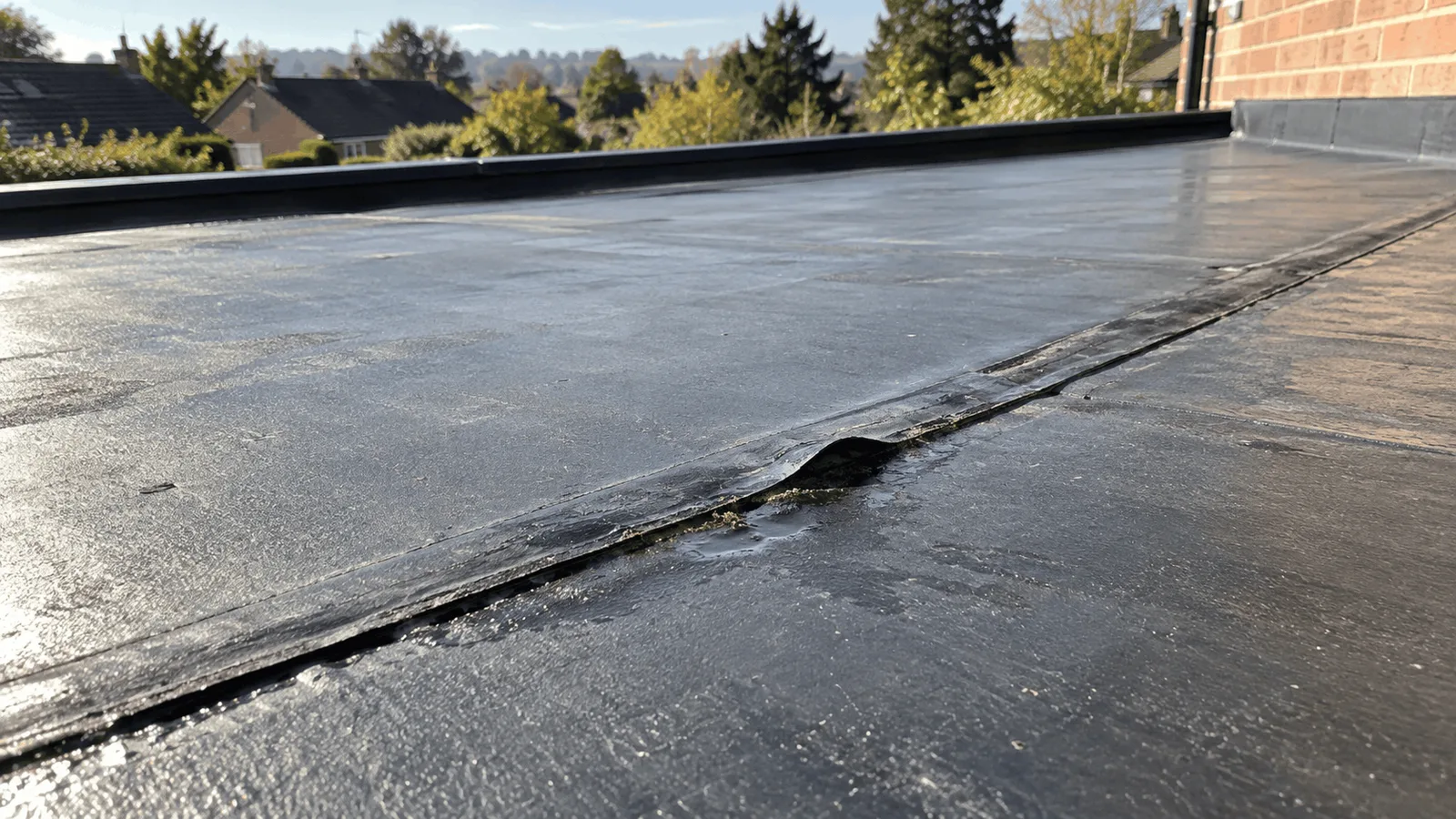
- Early warning signs: Lifting edges, visible gaps, wrinkles, and loose seam sections.
- Can failed seams cause leaks? Yes, water can enter beneath the membrane through compromised joints.
- Can EPDM seams be repaired? Many localised seam defects can be repaired using compatible materials.
- When is replacement necessary? Widespread seam failure or extensive underlying damage may require more substantial work.
- Best prevention: Maintain drainage, monitor vulnerable areas, and arrange inspections when defects appear.
What Are EPDM Roof Seams and Why Do They Matter?
EPDM stands for ethylene propylene diene monomer, a synthetic rubber membrane commonly used to waterproof flat and low-pitched roofs.
EPDM roofing is frequently installed on:
- Garages
- Home extensions
- Dormers
- Garden rooms
- Commercial buildings
- Other suitable flat-roof structures
Some roofs can be covered using a single sheet of EPDM.
Larger or more complicated roofs may require multiple membrane sections, creating seams where the sheets overlap and are joined.
These seams must form a continuous waterproof connection.
Depending on the roofing system, they may be constructed using manufacturer-approved seam tapes, primers, adhesives, or other specified components.
When installed correctly, the joints should work alongside the rest of the membrane to keep rainwater out.
Aztech Roofing's Flat & EPDM Roofs service provides more information about EPDM roofing systems and their applications.
7 Common Reasons Why EPDM Roof Seams Fail
If you're wondering why do EPDM roof seams fail, these are seven common causes worth understanding.
1. Poor Surface Preparation
EPDM seams require properly prepared surfaces to achieve reliable bonding.
Dirt, dust, moisture, or other contamination can interfere with adhesion.
If the membrane isn't cleaned and prepared according to the manufacturer's instructions, the joint may not bond correctly.
Over time, poorly bonded sections can begin to lift or separate.
Prevention tip: Use the specified cleaning, preparation, and priming methods for the particular EPDM system.
2. Incorrect Adhesives or Seam Materials
Not every roofing adhesive or sealant is suitable for EPDM.
Using incompatible products can produce weak or unreliable joints.
Different membrane systems may require specific seam tapes, primers, or bonding products.
Substituting general-purpose sealants for approved seam components can compromise waterproofing.
Prevention tip: Ensure all seam materials are compatible with the installed membrane and approved for the intended application.
3. Poor Installation Technique
Even suitable materials can fail if they're applied incorrectly.
Potential installation mistakes include:
- Insufficient seam overlap
- Incorrect primer application
- Inadequate pressure during bonding
- Wrinkles or trapped contamination
- Poorly formed corners and junctions
- Failure to follow product-specific installation requirements
These defects may leave weak areas within the joint.
Prevention tip: Choose installers familiar with the membrane system and its seam construction requirements.
4. Installation in Unsuitable Weather Conditions
Temperature, moisture, and surface conditions can affect the installation of EPDM seam products.
Some adhesives and primers have specific application temperature ranges.
Rain, condensation, or damp membrane surfaces may also interfere with bonding.
A seam installed outside the product's requirements may not achieve the intended performance.
Prevention tip: Follow manufacturer guidance on weather conditions, drying times, and installation procedures.
5. Thermal Movement and Structural Stress
EPDM is flexible, allowing it to accommodate normal temperature-related movement.
However, poorly detailed seams can experience unnecessary stress.
Movement may occur around:
- Roof edges
- Changes in roof level
- Roof penetrations
- Junctions with adjoining walls
- Areas where the substrate moves
If a seam is incorrectly positioned or installed under excessive tension, it may gradually separate.
Prevention tip: Ensure membrane layouts and junction details allow for expected movement.
6. Standing Water and Drainage Problems
EPDM membranes are designed to resist water, and suitable systems can tolerate periods of standing water.
However, persistent ponding may indicate inadequate drainage, blocked outlets, or poor roof falls.
Standing water doesn't automatically mean a seam will fail.
But where a seam is already defective, prolonged water exposure can increase the opportunity for moisture to enter beneath the membrane.
Prevention tip: Keep outlets clear and investigate persistent ponding rather than relying on seam repairs alone.
7. Physical Damage and Previous Repairs
Foot traffic, dropped tools, sharp debris, and careless maintenance can damage EPDM membranes.
Seams may also be affected by inappropriate repair materials or poorly completed previous work.
Repeated patching without identifying the underlying cause can leave the same area vulnerable.
Prevention tip: Limit unnecessary roof access and use compatible repair systems when defects occur.
How Can You Spot the Early Signs of EPDM Seam Failure?
Knowing why do EPDM roof seams fail is only half the battle.
Recognising the warning signs can help you arrange repairs before moisture reaches the roof structure.
Look for these common symptoms.
Lifting Seam Edges
A seam edge that begins to peel away from the membrane may indicate a bonding problem.
This is one of the clearest visible signs that a joint needs professional attention.
Visible Gaps Between Membrane Sections
A properly formed seam should maintain a continuous waterproof connection.
Gaps or separated sections can create routes for rainwater.
Wrinkles or Unusual Distortion
Some surface wrinkles may be cosmetic, depending on the installation.
However, wrinkles that affect a seam or create tension around a joint deserve investigation.
Loose or Poorly Bonded Sections
If a seam appears detached or moves unusually, its waterproofing performance may be compromised.
Avoid pulling at the membrane to test it yourself.
Damp Patches Indoors
Water stains, damp insulation, or discoloured roof decking may indicate a leak.
However, these symptoms can also result from damaged edges, roof penetrations, or other defects.
Aztech Roofing's guide to Flat Roof Warning Signs explains additional symptoms that homeowners should watch for.
EPDM Seam Failure vs Other Flat Roof Problems
Not every EPDM roof leak originates at a seam.
The table below highlights some common differences.
Water may travel beneath the membrane before becoming visible indoors.
This means the location of a ceiling stain doesn't always identify the original entry point.
A professional inspection can help establish the actual cause.
Can Failed EPDM Roof Seams Be Repaired?
Yes, many localised seam defects can be repaired without replacing the entire roof.
The appropriate method depends on the membrane system, condition of the joint, and extent of the damage.
When a Localised Repair May Be Suitable
Repair may be appropriate when:
- Only a small section of seam has separated.
- The surrounding membrane remains in good condition.
- The underlying roof deck is sound.
- Compatible repair materials are available.
- The original cause can be corrected.
When More Extensive Work May Be Needed
Replacement of affected membrane sections may be necessary when:
- Multiple seams have failed across the roof.
- The membrane has widespread deterioration.
- Water has damaged the underlying roof deck.
- Previous repairs have repeatedly failed.
- The original installation has fundamental defects.
The aim should be to restore reliable waterproofing rather than repeatedly covering the same problem.
Aztech Roofing's Roof Repairs service is relevant for homeowners dealing with leaking EPDM seams and other roofing defects.
How Are EPDM Roof Seams Repaired?
The repair process depends on the manufacturer's system and the condition of the existing roof.
A typical professional repair may involve five stages.
Step 1: Identify the Defect
The roofer checks the affected seam and surrounding membrane.
They may also assess roof edges, penetrations, drainage, and any signs of water damage.
Step 2: Assess the Existing Materials
The membrane must be suitable for repair.
If the surrounding EPDM is extensively damaged or the substrate has deteriorated, a simple seam repair may not be sufficient.
Step 3: Prepare the Surface
The affected area is cleaned and prepared using the methods specified for the repair system.
Correct preparation is essential for reliable bonding.
Step 4: Apply Compatible Seam Repair Materials
Depending on the system, the repair may involve approved seam tape, primer, or a compatible EPDM patch.
The repair must provide the required overlap and secure adhesion.
Step 5: Inspect the Finished Joint
The completed repair should be checked for secure bonding and suitable waterproofing.
Any underlying drainage or movement problems should also be addressed.
Avoid using ordinary household sealants as a permanent EPDM seam repair. They may not be compatible with the membrane and could make future repairs more difficult.
How Much Does an EPDM Seam Repair Cost?
Repair costs vary depending on the location, extent of damage, and condition of the roofing system.
The main factors include:
- Length of the failed seam: Larger affected areas require more materials and labour.
- Roof accessibility: Difficult access may increase costs.
- Membrane condition: Deteriorated material may require more extensive work.
- Repair complexity: Corners, edges, and penetrations can involve additional detailing.
- Underlying water damage: Wet insulation or damaged decking may need replacing.
- Drainage defects: Correcting ponding or blocked outlets may add to the work.
A localised seam repair will often cost less initially than replacing the entire EPDM roof.
However, widespread seam failure may make replacement the more economical long-term option.
How Can You Prevent EPDM Roof Seam Failure?
Good maintenance won't correct poor installation, but it can help identify defects before they become serious.
Follow these practical steps:
- Keep drainage outlets clear: Prevent leaves and debris from restricting water flow.
- Check visible seams: Look for lifting edges or separation from a safe location.
- Monitor after storms: Investigate damage caused by debris or severe weather.
- Avoid unnecessary foot traffic: Reduce the risk of punctures and accidental damage.
- Address minor defects promptly: Small seam problems can become more extensive.
- Arrange professional inspections: Have suspicious joints assessed before leaks spread.
Aztech Roofing's Flat Roof Maintenance Checklist provides further guidance on looking after flat roofing systems.
For homeowners considering EPDM installation or replacement, the guide to the Benefits of EPDM Flat Roofing explains why this material remains a popular choice.
If you're concerned about lifting seams or recurring leaks, Aztech Roofing's Free Roof Inspections page provides a starting point for arranging an assessment.
Key Takeaways
So, why do EPDM roof seams fail?
Most problems involve incorrect installation, poor bonding, unsuitable materials, or stress around vulnerable roof details.
- EPDM seams connect membrane sections and must maintain a continuous waterproof joint.
- Poor surface preparation is a common cause of weak bonding.
- Incorrect adhesives, inadequate pressure, and installation errors can compromise seams.
- Movement and physical damage may contribute to joint separation.
- Lifting edges, visible gaps, and recurring damp patches are warning signs.
- Many localised seam defects can be repaired using compatible EPDM materials.
- Widespread failures or underlying roof damage may require more extensive work.
- Regular maintenance and professional inspections help protect the roof's long-term performance.
If you've noticed loose seams, persistent damp, or other signs of flat roof damage, Aztech Roofing can help you explore suitable inspection and repair options.
EPDM roofing is built to keep water out—but every seam needs to hold up its end of the bargain.
FAQs
Why do EPDM roof seams fail over time?
EPDM roof seams can fail because of poor surface preparation, incorrect bonding materials, installation defects, or excessive movement. Physical damage and unsuitable previous repairs may also weaken the joints. Proper installation and timely maintenance help reduce the risk of premature failure.
How can I tell if an EPDM roof seam is failing?
Look for lifting seam edges, visible gaps, separation, or unusual distortion around the joint. Damp patches indoors may also indicate water entry, although the leak could originate elsewhere. A professional inspection can confirm whether the seam has failed and identify the appropriate repair.
Can a failed EPDM seam be repaired without replacing the roof?
Yes, many localised EPDM seam defects can be repaired using compatible materials and approved techniques. The surrounding membrane and underlying roof structure must be in suitable condition. Widespread seam failure or extensive water damage may require more substantial replacement work.
Does standing water cause EPDM roof seams to fail?
Standing water doesn't automatically cause a correctly installed EPDM seam to fail. However, persistent ponding can expose existing defects to prolonged moisture and may indicate drainage problems. Any leaking seam should be assessed alongside the roof's drainage condition.
How often should EPDM roof seams be inspected?
There is no single inspection interval suitable for every EPDM roof. Roof age, weather exposure, surrounding trees, and previous defects all influence how frequently checks may be needed. Arrange a professional inspection when you notice lifting seams, storm damage, or recurring signs of moisture.
Related reading
Explore local roofing help
A guide cannot diagnose a specific roof. Explore our services and local coverage, or arrange a free inspection.
Need advice on your roof?
Start with a free inspection and a clear explanation of the options.