
Flat & EPDM Roofs
Why Is My Flat Roof Leaking at the Edges?
Noticed damp patches near your ceiling corners, peeling paint along the walls, or water dripping where your flat roof meets the building? These warning signs could mean your roof is letting water in around its edges.
By Aztech Roofing ·
Quick guide
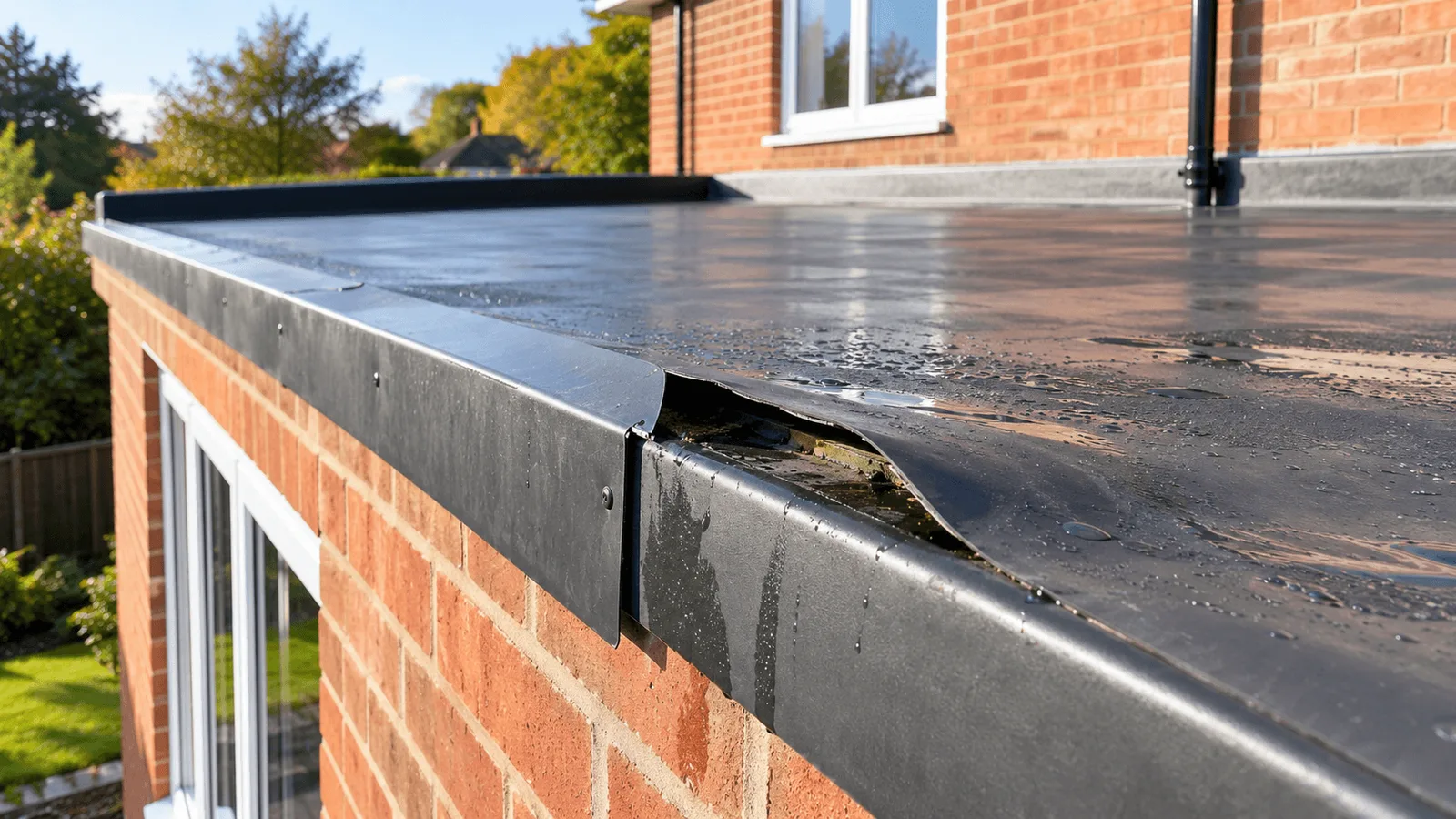
Why is my flat roof leaking at the edges? Most edge leaks occur because water is finding its way through vulnerable joints, damaged waterproofing, or poorly sealed roof details.
- Damaged edge flashing: Metal or waterproof coverings have loosened or deteriorated.
- Failing roof membrane: The waterproof layer has split, lifted, or separated near the perimeter.
- Blocked gutters: Rainwater overflows or backs up against vulnerable roof edges.
- Poor roof drainage: Standing water increases exposure at weak joints.
- Failed edge trims: Loose or poorly fitted trims allow water beneath the covering.
- Temperature-related movement: Expansion and contraction gradually weaken joints and seals.
- Poor installation: Incorrectly finished roof edges create potential entry points for rainwater.
What should you do? Check for visible warning signs from a safe location, prevent further internal water damage, and arrange a professional inspection if the leak continues.
Introduction
If you're wondering why is my flat roof leaking at the edges, the problem often comes down to damaged flashing, deteriorating roof membranes, poor drainage, or failing seals around the perimeter.
Flat roofs are particularly vulnerable at their edges because these areas contain joints, changes in direction, and connections between different building materials.
For homeowners in Worcester and the surrounding areas, Aztech Roofing provides professional roofing services to help identify leaks and determine suitable repairs before moisture causes more extensive damage.
The good news? An edge leak doesn't automatically mean you need an entirely new roof. Understanding what's causing the problem is the first step towards putting it right.
1. Damaged or Poorly Installed Edge Flashing
Flashing protects vulnerable areas where roofing materials meet walls, parapets, or other building features.
When flashing becomes loose, cracked, corroded, or improperly sealed, rainwater can travel behind it and enter the roof structure.
Common warning signs include:
- Visible gaps between flashing and adjoining surfaces.
- Rusting or displaced metal sections.
- Damp patches near internal wall junctions.
- Water appearing after heavy or wind-driven rain.
How to fix it: A roofer may need to reseal, refix, or replace the affected flashing, depending on its condition.
2. Cracked, Split, or Lifting Roof Membranes
Your flat roof relies on a waterproof membrane to keep rainwater outside.
Over time, roofing materials can deteriorate through weather exposure, movement, installation defects, or physical damage. The edges are especially vulnerable because the membrane must be securely terminated and sealed.
For example, a small separation along an EPDM rubber roof's perimeter can allow water to penetrate beneath the covering.
Signs to watch for include:
- Lifting membrane edges.
- Visible splits or tears.
- Wrinkles around perimeter joints.
- Moisture appearing beneath the roof covering.
How to fix it: Depending on the material and extent of damage, repairs may involve compatible membrane patches, adhesives, or replacement of the affected section.
Learn more about waterproofing systems through Flat & EPDM Roofs.
3. Blocked Gutters and Overflowing Rainwater
Sometimes, the problem isn't the roof covering itself.
Blocked gutters, outlets, and downpipes can prevent rainwater from draining away effectively. When water accumulates, it may overflow onto vulnerable walls or reach poorly sealed perimeter details.
Leaves, moss, dirt, and other debris are common culprits.
How to fix it: Clear blocked drainage components and check whether rainwater flows freely towards the outlets.
The UK's Met Office provides seasonal weather guidance that can help homeowners prepare their properties for challenging conditions.
4. Standing Water and Inadequate Roof Falls
Flat roofs aren't supposed to be completely level.
They require a slight slope, known as a fall, to direct rainwater towards drainage outlets.
When the roof has insufficient falls, sagging sections, or blocked outlets, water can collect near its edges.
This is commonly called ponding water.
Although temporary standing water doesn't always indicate failure, persistent ponding can expose vulnerable seams and perimeter details to prolonged moisture.
How to fix it: A professional should identify whether the issue involves blocked drainage, structural movement, or inadequate roof falls.
For further information about drainage and roof design, consult the NHBC Standards, which include guidance on flat roofing construction.
5. Loose or Damaged Edge Trims
Edge trims help secure and protect the perimeter of a flat roof.
If they're loose, damaged, incorrectly fitted, or missing appropriate seals, rainwater may find a route beneath the waterproof covering.
This can be particularly noticeable during storms when wind pushes rain towards exposed roof edges.
Look for:
- Loose perimeter trims.
- Missing fixings.
- Gaps between trims and roofing materials.
- Sections that appear bent or displaced.
How to fix it: Repairs may involve replacing damaged trims, securing loose sections, and restoring the waterproof connection between the trim and roof membrane.
6. Expansion, Contraction, and Weather Damage
British weather gives roofing materials plenty to deal with.
Sunshine warms roof surfaces, while colder temperatures cause materials to contract. Over repeated cycles, this movement can stress seams, joints, and perimeter seals.
Strong winds may also lift inadequately secured roof edges, creating gaps where water can enter.
How to fix it: A roofer should inspect the affected joints and determine whether local repairs or more extensive waterproofing work are required.
Regular inspections can help identify these issues before they develop into persistent leaks.
7. Poor Installation or Previous Repair Work
Sometimes, the answer to why is my flat roof leaking at the edges lies in how the roof was originally installed.
Common workmanship-related problems include:
- Insufficient membrane overlap.
- Incorrectly installed flashing.
- Poorly sealed corners.
- Incompatible repair materials.
- Inadequate membrane termination at roof edges.
A temporary patch might stop visible dripping without addressing the underlying water entry point.
How to fix it: Arrange a thorough inspection to establish whether the problem can be repaired locally or whether the affected roofing detail needs rebuilding.
For more information about identifying and addressing roofing damage, explore Roof Repairs.
How to Identify Where Your Flat Roof Is Leaking
Water doesn't always appear directly beneath the point where it enters.
It can travel along roof decking, insulation, timber, or internal surfaces before becoming visible.
That's why identifying the exact source of an edge leak can be more complicated than spotting a damp patch.
Warning Signs to Look For
- Brown or yellow stains near ceiling edges.
- Bubbling paint or peeling wallpaper.
- Dampness around the roof-to-wall junction.
- Musty smells in rooms beneath the roof.
- Water dripping during prolonged rainfall.
- Visible damage to flashing or roof trims.
The guide to Flat Roof Warning Signs explains additional indicators that your roof may need attention.
Safety first: Never climb onto a wet, damaged, or potentially weakened flat roof to investigate a leak. Inspect only from a safe position and leave roof-level checks to a qualified professional.
Can You Repair a Flat Roof That's Leaking at the Edges?
Yes, many flat roof edge leaks can be repaired without replacing the entire roof.
The appropriate solution depends on the roof's age, waterproofing material, condition, and the extent of any hidden moisture damage.
A professional inspection is particularly important when water has entered the insulation or roof decking, because surface repairs alone may not resolve concealed damage.
If the roof is approaching the end of its service life, replacement may offer better long-term value than repeated repairs.
How to Prevent Future Flat Roof Edge Leaks
Prevention is usually less disruptive than dealing with water-damaged ceilings and soaked insulation.
A few practical habits can make a difference:
- Keep gutters and outlets clear. Remove accumulated leaves and debris safely, particularly during autumn.
- Check roof edges visually. Look for loose trims, lifting membranes, and damaged flashing from ground level.
- Investigate damp patches early. Small stains can indicate moisture entering the building.
- Arrange periodic professional inspections. Pay particular attention after severe storms or when the roof is ageing.
- Use compatible repair materials. Incorrect adhesives or sealants may damage existing roofing systems or fail prematurely.
For additional advice, read the Flat Roof Maintenance guide.
It's also worth understanding the Common Causes of Roof Leaks, since moisture can sometimes originate from an adjoining wall, roof penetration, or drainage detail rather than the edge itself.
Key Takeaways
So, why is my flat roof leaking at the edges?
The most likely causes include damaged flashing, lifting membranes, blocked drainage, loose edge trims, and poorly finished waterproofing details.
The important things to remember are:
- Find the source, not just the stain. Water can travel before appearing inside your property.
- Don't ignore small leaks. Continued moisture exposure can damage insulation, ceilings, and structural materials.
- Choose the right repair. Different roofing systems require compatible materials and techniques.
- Maintain drainage and perimeter details. Regular checks help catch problems early.
- Get professional advice when needed. A proper assessment can prevent unnecessary repairs or premature replacement.
If you've noticed damp patches, damaged roof edges, or recurring leaks in Worcester or the surrounding areas, arranging an inspection is a sensible next step.
Explore Free Roof Inspections to have the problem assessed and understand your available repair options.
A small gap at the roof edge can become a much bigger headache if water keeps finding its way inside.
FAQs
Why is my flat roof leaking at the edges only when it rains heavily?
Heavy rainfall can overwhelm blocked drainage outlets or expose weaknesses in flashing and membrane joints. Wind-driven rain may also enter gaps that remain dry during lighter showers. A professional inspection can identify whether drainage, waterproofing, or both are responsible.
Can I use sealant to stop my flat roof leaking at the edges?
Sealant may temporarily reduce water entry if it is compatible with the existing roofing material. However, applying it over wet, dirty, or damaged surfaces can trap moisture or fail to address the underlying defect. A lasting repair requires identifying the leak source and using the correct waterproofing method.
How much does it cost to repair a leaking flat roof edge in the UK?
Repair costs vary according to the roofing material, accessibility, damage extent, and whether flashing or insulation needs replacing. A small localised repair will generally cost less than extensive perimeter reconstruction or roof replacement. Obtaining a detailed quotation after an inspection is the most reliable way to understand the likely cost.
Does a leaking flat roof edge mean I need a new roof?
Not necessarily, because isolated membrane splits, loose trims, and flashing defects can often be repaired. Replacement becomes more likely when waterproofing is extensively deteriorated or moisture has damaged large sections of the roof structure. A roofer can assess whether repair or replacement offers better long-term value.
How often should I inspect my flat roof for edge leaks?
A visual check from a safe position twice a year, particularly in spring and autumn, is a useful starting point. Additional checks are sensible after severe storms or whenever new damp patches appear. Professional inspections can identify concealed deterioration that may not be obvious from the ground.
Related reading
Explore local roofing help
A guide cannot diagnose a specific roof. Explore our services and local coverage, or arrange a free inspection.
Need advice on your roof?
Start with a free inspection and a clear explanation of the options.