
Lead Work & Flashing
How Long Does Lead Flashing Last on a Roof?
How long does lead flashing last? Learn its typical lifespan, what causes damage, warning signs, and when to repair or replace it.
By Aztech Roofing ·
Quick guide
- How long does lead flashing last? Learn its typical lifespan, what causes damage, warning signs, and when to repair or replace it.
TL;DR – Quick Guide
- Typical lifespan: Properly installed lead flashing can last 50–100 years or longer, depending on conditions.
- Why does lead last so long? It resists corrosion and naturally develops a protective surface patina.
- What shortens its lifespan? Poor installation, excessive movement, unsuitable sizing, and physical damage.
- Early warning signs: Splits, lifting edges, loose sections, and water stains.
- Can lead flashing be repaired? Yes, some localised defects can be repaired.
- When is replacement necessary? Extensive deterioration or incorrectly installed flashing may need renewing.
- Best prevention: Arrange inspections when defects are suspected and address problems promptly.
What Is Lead Flashing and Why Is It Used?
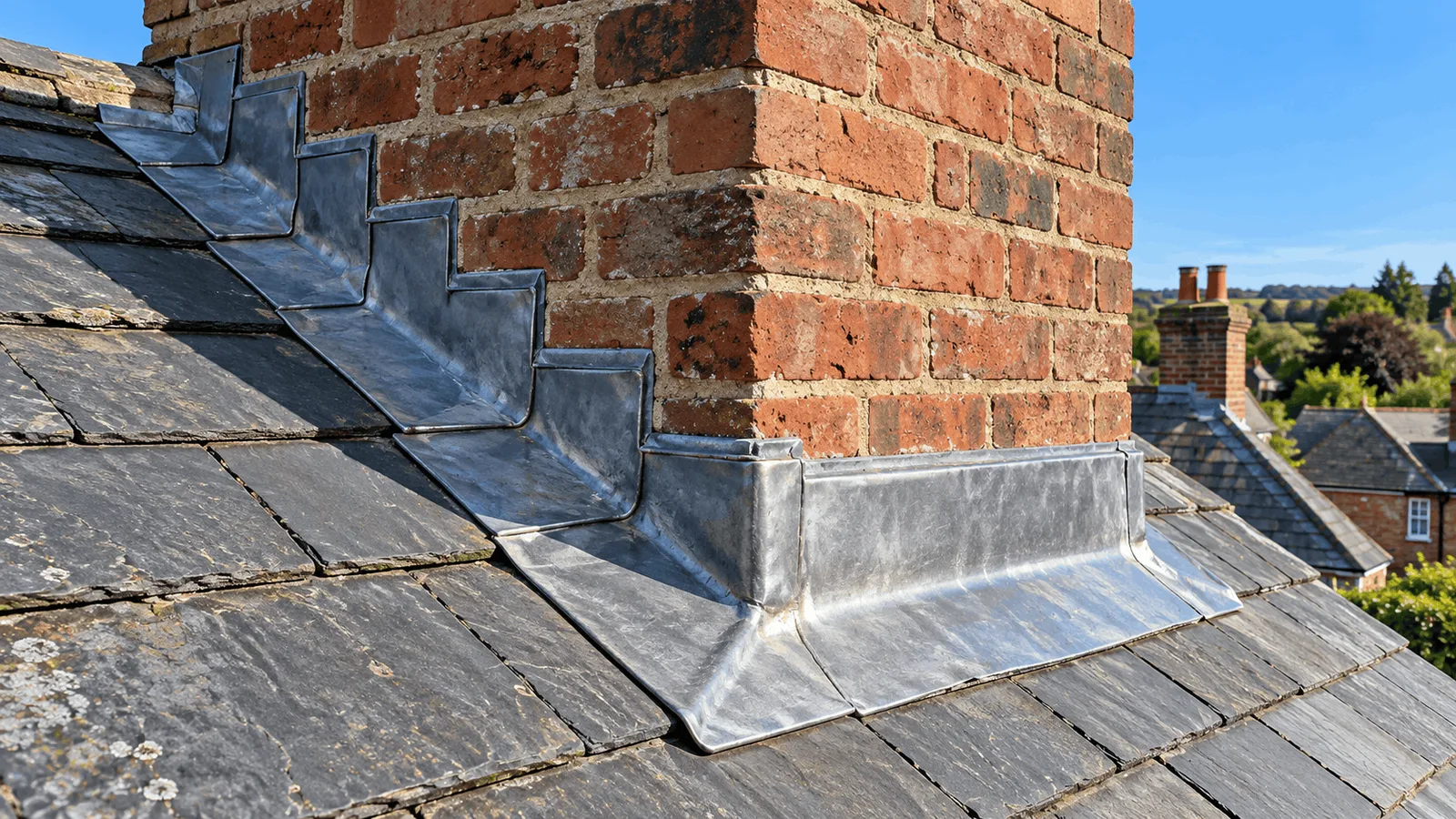
Lead flashing is a flexible, weather-resistant roofing material used to protect junctions where rainwater could enter a building.
Common locations include:
- Chimney bases and sides
- Roof-to-wall junctions
- Roof valleys
- Dormer windows
- Skylights and roof windows
- Other exposed roofing details
Lead is particularly useful because it can be shaped to follow different roof profiles while remaining durable in outdoor conditions.
It also develops a natural surface patina that helps protect the material.
However, even high-quality lead flashing needs appropriate design, installation, and support to perform reliably.
Aztech Roofing's Lead Work & Flashing service covers this important area of roof weatherproofing.
How Long Does Lead Flashing Last on Average?
When homeowners ask how long does lead flashing last, the commonly cited estimate is around 50 to 100 years, with some installations lasting longer.
That figure should be treated as a broad indication, not a guaranteed service life.
The condition of the flashing depends on several factors.
A well-installed lead flashing detail may outlast some surrounding roofing components.
Conversely, incorrectly installed flashing can fail much sooner than expected.
The age of lead flashing alone doesn't determine whether it needs replacing. Its actual condition matters more.
6 Factors That Affect How Long Lead Flashing Lasts
1. Installation Quality
Correct installation is one of the biggest factors affecting durability.
Lead expands and contracts as temperatures change.
If flashing sections are too long, incorrectly fixed, or unable to accommodate movement, stress may develop over time.
This can lead to cracking, distortion, or splits.
Proper installation should allow the material to move without compromising the roof's waterproofing.
2. Lead Thickness and Specification
Lead sheet is available in different thicknesses, commonly described using code numbers.
Different roofing applications require appropriate specifications.
For example, a roof valley may need a different lead specification from a small flashing detail.
Using unsuitable material can affect durability, particularly where the lead is exposed to movement or concentrated water flow.
A competent roofing professional should select the specification appropriate to the particular detail.
3. Weather Exposure
Lead is naturally weather-resistant, but environmental conditions still influence its performance.
Strong winds may affect poorly secured flashing, while temperature changes cause repeated expansion and contraction.
Exposed roof areas can experience greater movement and weathering than sheltered locations.
The design and installation must account for these conditions.
4. Roof and Building Movement
Roofs and buildings naturally experience small amounts of movement.
If lead flashing is rigidly restrained or incorrectly detailed, this movement can place stress on the material.
Over time, the flashing may split or pull away from surrounding surfaces.
Correctly designed joints and fixings help accommodate normal movement.
5. Surrounding Roofing Materials
Lead flashing works as part of a wider roofing system.
Damaged tiles, deteriorated mortar, blocked valleys, or defective masonry can affect how water drains around it.
A leak near lead flashing doesn't always mean the lead itself has failed.
For example, damaged chimney masonry may allow water to enter even when the flashing remains serviceable.
Aztech Roofing's guide to Chimney Leak Causes explains other problems that can affect chimney areas.
6. Physical Damage and Previous Repairs
Lead is relatively soft compared with many other roofing metals.
Foot traffic, careless maintenance, falling debris, or unsuitable repair methods can damage it.
Repeated patching without addressing the underlying cause may also leave the roof vulnerable.
A durable material still needs careful treatment. Even lead isn't indestructible.
How Can You Tell If Lead Flashing Needs Replacing?
Knowing how long does lead flashing last is useful, but recognising the warning signs is even more important.
Look for these common indicators:
- Visible splits: Cracks or tears in the lead sheet.
- Lifting edges: Flashing pulling away from the wall or roof covering.
- Loose sections: Displaced or poorly secured components.
- Distortion: Buckling or unusual movement in the lead.
- Failed joints: Deteriorated mortar or other junction details.
- Water stains: Damp patches around chimneys, walls, or roof junctions.
- Recurring leaks: Problems that return after previous repairs.
Not every visible change means the flashing has failed.
Lead naturally develops a grey patina, which is usually a normal part of its ageing process.
A professional inspection can distinguish harmless weathering from defects that need attention.
Can Lead Flashing Be Repaired Instead of Replaced?
Yes, many localised flashing defects can be repaired.
The appropriate solution depends on the extent of the damage, the lead's condition, and the reason the defect developed.
When Repairs May Be Suitable
A targeted repair may be appropriate when:
- A small section has become displaced.
- A joint requires attention.
- The surrounding lead remains in good condition.
- The defect is limited to an accessible area.
- The underlying installation detail is otherwise suitable.
When Replacement May Be Better
Replacement may be necessary when:
- The lead has extensive splits or deterioration.
- Large sections are incorrectly installed.
- Movement repeatedly causes cracking.
- Previous repairs have failed.
- The existing material or detailing is unsuitable for the application.
Simply covering a split with sealant may provide only temporary protection if the underlying movement problem remains.
Aztech Roofing's guide to Roof Flashing Repairs explains common repair approaches and why identifying the cause matters.
For associated roofing defects, the company's Roof Repairs service is another relevant resource.
How Much Does Lead Flashing Repair or Replacement Cost?
The cost depends on the location, material requirements, access, and extent of the work.
Several factors influence the final quotation:
A small localised repair may cost less than replacing extensive chimney or valley flashing.
However, the cheapest short-term repair isn't always the most economical option if the underlying problem remains unresolved.
Request a professional assessment before deciding.
How Often Should Lead Flashing Be Inspected?
There's no single inspection schedule suitable for every roof.
The roof's age, exposure, previous repairs, and surrounding conditions all affect maintenance needs.
Arrange an inspection if you notice:
- Loose or distorted flashing
- Damp patches around chimneys or walls
- Visible cracks or gaps
- Storm damage
- Recurring leaks after heavy rainfall
It can also be sensible to check leadwork during broader roof maintenance or before major roofing work.
Aztech Roofing's guide to What to Expect During a Roof Inspection explains how roof assessments can identify potential defects.
You can also explore Free Roof Inspections if you're concerned about ageing leadwork.
How Can You Make Lead Flashing Last Longer?
Lead flashing doesn't usually require complicated maintenance, but a few practical steps can help protect it.
- Keep drainage routes clear: Prevent leaves and debris from obstructing valleys and gutters.
- Address loose sections promptly: Small defects can become more serious during storms.
- Avoid unnecessary foot traffic: Lead can be damaged by careless handling.
- Maintain surrounding masonry: Cracked mortar or damaged chimney components may affect waterproofing.
- Use suitable repair methods: Avoid relying on inappropriate sealants as a permanent solution.
- Arrange professional checks: Investigate visible defects before significant water damage develops.
Homeowners should avoid climbing onto roofs to inspect or repair lead flashing themselves.
Working at height carries serious risks, particularly around steep pitches and fragile roofing materials.
Key Takeaways
So, how long does lead flashing last on a roof?
Properly specified and installed lead flashing can remain serviceable for 50 to 100 years or longer, but its actual lifespan depends on the conditions.
- Lead is a durable roofing material with excellent weather resistance.
- Installation quality and suitable material specification strongly influence longevity.
- Natural expansion and contraction must be accommodated to prevent splitting.
- Visible cracks, lifting edges, and recurring leaks are warning signs.
- Localised defects may be repairable without replacing all the flashing.
- Extensive deterioration or unsuitable installation may require replacement.
- Professional inspections help determine whether ageing leadwork is still performing properly.
If you're concerned about deteriorating lead flashing or recurring roof leaks, Aztech Roofing can help you explore suitable inspection and repair options.
Lead flashing can last for generations—but only when the details are right.
FAQs
How long does lead flashing last on a roof in the UK?
Properly installed lead flashing can remain serviceable for 50 to 100 years or longer under suitable conditions. Its actual lifespan depends on material specification, installation quality, weather exposure, and maintenance. A professional inspection is the best way to assess whether existing flashing still provides reliable protection.
Does lead flashing deteriorate over time?
Yes, lead flashing can eventually deteriorate because of movement, physical damage, or unsuitable installation details. However, the grey patina that develops naturally on lead is usually protective rather than a sign of failure. Splits, loose sections, and recurring leaks are more concerning warning signs.
Can damaged lead flashing be repaired?
Yes, some localised defects can be repaired without replacing the entire flashing system. The repair method depends on the condition of the lead and the cause of the damage. Extensive splits or repeated movement-related failures may require replacement.
Is lead flashing better than other flashing materials?
Lead is valued for its flexibility, durability, and ability to accommodate complex roof details. However, other materials may be suitable depending on the roof design, application, and specification. The best choice depends on compatibility, installation requirements, and long-term performance.
Should I replace lead flashing when replacing my roof?
Not necessarily, because existing lead flashing may still be serviceable if it's correctly installed and in good condition. However, roof replacement provides an opportunity to inspect concealed junctions and address ageing or unsuitable details. A roofing professional can determine whether the flashing should be retained, repaired, or renewed.
Related reading
Explore local roofing help
A guide cannot diagnose a specific roof. Explore our services and local coverage, or arrange a free inspection.
Need advice on your roof?
Start with a free inspection and a clear explanation of the options.