
Lead Work & Flashing
Why Do Roof Valleys Leak During Heavy Rain?
Why do roof valleys leak during heavy rain? Discover 7 common causes, warning signs, repair options, and ways to prevent water damage.
By Aztech Roofing ·
Quick guide
- Why do roof valleys leak during heavy rain? Discover 7 common causes, warning signs, repair options, and ways to prevent water damage.
TL;DR – Quick Guide
- What is a roof valley? The internal junction where two sloping roof sections meet.
- Why do roof valleys leak? Common causes include blocked drainage, damaged valley linings, broken tiles, and poor installation.
- Why are leaks worse during heavy rain? Roof valleys carry concentrated water runoff from adjoining roof slopes.
- Can a leaking roof valley be repaired? Yes, many localised defects can be repaired without replacing the entire roof.
- What are the warning signs? Damp ceilings, stained loft timbers, overflowing valleys, and displaced roof coverings.
- Best prevention: Keep drainage routes clear and arrange inspections when defects are suspected.
What Is a Roof Valley and Why Is It Vulnerable to Leaks?
A roof valley forms where two pitched roof slopes meet at an inward angle.
Instead of allowing water to flow down a single roof surface, the valley collects runoff from both adjoining slopes and directs it towards the guttering.
This makes roof valleys particularly important for drainage.
Common valley construction methods include:
- Lead-lined valleys: Traditional metal linings that direct water away from the roof.
- GRP valleys: Glass-reinforced plastic components designed to provide a waterproof drainage channel.
- Other metal valleys: Materials such as zinc or aluminium, where suitable for the roofing system.
- Closed valleys: Arrangements where roof coverings overlap or meet above the valley waterproofing detail.
Every design must provide a reliable route for rainwater to leave the roof.
When the valley becomes blocked, damaged, or incorrectly installed, water may escape beneath the surrounding tiles or slates.
For homeowners concerned about deteriorated metal valley details, Aztech Roofing's Lead Work & Flashing service is a relevant starting point.
7 Common Reasons Why Roof Valleys Leak
If you're wondering why do roof valleys leak during storms, these are seven common causes.
1. Blocked Roof Valleys
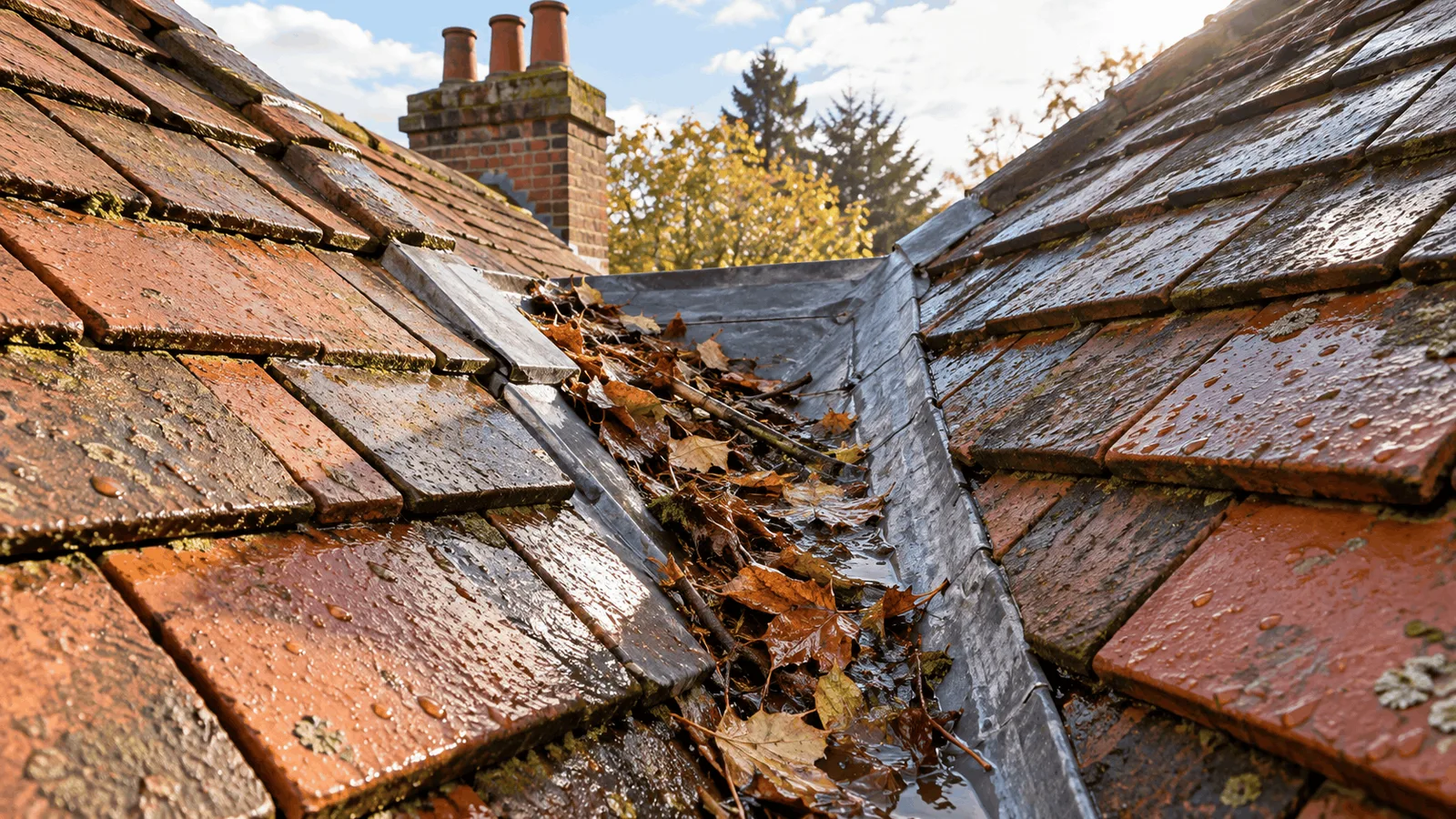
Leaves, moss, twigs, and other debris can collect in roof valleys.
Over time, these materials may restrict the normal flow of rainwater.
During heavy rainfall, water can build up behind the obstruction and potentially reach areas that aren't designed to remain submerged.
Common warning signs include:
- Visible moss or leaf buildup
- Water spilling over the valley edges
- Debris collecting near the gutter outlet
- Recurring leaks after prolonged rain
Prevention tip: Arrange safe removal of debris before blockages become severe.
2. Damaged or Corroded Valley Flashing
Metal valley linings can deteriorate because of age, movement, physical damage, or unsuitable installation.
Cracks, splits, corrosion, and poorly formed joints may create openings for water.
Lead valleys can remain serviceable for many decades when correctly specified and installed, but they're not immune to damage.
If the lining becomes defective, rainwater may reach the roof structure beneath.
Aztech Roofing's guide to Roof Flashing Repairs explains common flashing defects and the importance of suitable repair methods.
3. Broken or Displaced Roof Tiles
Roof tiles and slates surrounding a valley help guide rainwater towards the drainage channel.
If these materials crack, slip, or become displaced, water may reach vulnerable areas beneath the covering.
Broken tiles can also fall into the valley and obstruct drainage.
Prevention tip: Replace damaged roof coverings and investigate recurring movement around valley edges.
4. Poor Roof Valley Installation
Incorrectly installed valleys can leak even when the materials themselves are relatively new.
Potential problems include:
- Insufficient valley width
- Incorrect overlaps
- Inadequate support beneath the lining
- Poorly positioned surrounding tiles
- Unsuitable junction details
- Inadequate provision for material movement
These defects can interfere with water flow or allow rainwater beneath the roof covering.
Prevention tip: Use roofing professionals familiar with the requirements of the specific valley system.
5. Heavy Rain and Wind-Driven Water
Roof valleys naturally handle more concentrated runoff than many other roof areas.
During intense rainfall, the volume of water travelling through the valley increases.
Strong winds may also push water towards vulnerable overlaps or beneath damaged roof coverings.
Heavy rain doesn't necessarily create the underlying defect, but it can expose an existing weakness.
Prevention tip: Investigate leaks that occur only during storms rather than assuming they're unavoidable.
6. Damaged Roofing Underlay
Roofing underlay provides a secondary layer of protection beneath many pitched roof coverings.
If it becomes torn, deteriorated, or incorrectly detailed around a valley, water that reaches beneath the tiles may enter the roof space.
Underlay isn't intended to compensate indefinitely for a defective valley.
Prevention tip: Repair the primary drainage defect and assess any affected underlay during the investigation.
7. Freeze-Thaw Damage and Material Movement
Water trapped around roofing materials can freeze during cold weather.
As it expands, it may worsen existing cracks or damage vulnerable components.
Temperature changes also cause roofing materials to expand and contract.
If the valley system cannot accommodate normal movement, joints or linings may become stressed.
Prevention tip: Address blocked drainage and visible damage before winter weather makes problems worse.
Why Do Roof Valleys Leak More During Heavy Rain?
The simple answer is water volume.
A roof valley receives runoff from two roof slopes, concentrating the flow into a relatively narrow drainage route.
During light rainfall, a minor defect may not allow enough water through to create a noticeable leak.
During a downpour, however:
- More water enters the valley.
- Flow increases around joints and overlaps.
- Debris may restrict drainage.
- Water may build up behind obstructions.
- Existing gaps become exposed to greater water flow.
This explains why some valley leaks appear only during prolonged or wind-driven rain.
However, the underlying cause still needs to be identified.
How Can You Tell If a Roof Valley Is Leaking?
Roof valley leaks can be difficult to locate because water may travel along underlay or roof timbers before appearing indoors.
Look for these warning signs:
- Brown or yellow ceiling stains near an internal roof junction
- Damp insulation in the loft
- Water marks on rafters or other timbers
- Dripping during heavy rainfall
- Moss or debris collecting in the valley
- Cracked or missing tiles beside the valley
- Visible deterioration of the valley lining
Not every damp patch near a valley is caused by the valley itself.
Water may also enter through nearby flashing, broken tiles, or defective guttering.
Aztech Roofing's guide to the Common Causes of Roof Leaks explains other roofing problems that may produce similar symptoms.
Is It a Roof Valley Leak or a Gutter Problem?
Sometimes, water appearing near the edge of a roof is caused by blocked or damaged guttering rather than the roof valley.
Both problems can become particularly noticeable during heavy rain.
The symptoms can overlap, so a proper inspection is important.
For help distinguishing between the two, read Aztech Roofing's guide to Gutter Problems vs Roof Leaks.
How Do You Fix a Leaking Roof Valley?
The appropriate repair depends on the cause and extent of the damage.
Common repair options include:
Clearing Blocked Drainage
Leaves, moss, and debris may need to be removed to restore normal water flow.
The surrounding roofing materials should also be checked for damage.
Replacing Broken Tiles or Slates
Cracked or displaced coverings beside the valley can be replaced where appropriate.
This helps restore the intended drainage path.
Repairing or Renewing Valley Flashing
Localised defects may be repairable, depending on the material and condition.
However, extensive splits, corrosion, or unsuitable installation details may require replacement of the affected lining.
Correcting Installation Defects
If the valley was incorrectly constructed, simply applying sealant may not provide a reliable solution.
The affected section may need to be rebuilt using suitable components and detailing.
Aztech Roofing's Roof Repairs service is relevant for homeowners dealing with leaking valleys and damaged roof coverings.
How Much Does It Cost to Repair a Roof Valley?
Roof valley repair costs depend on the materials, access requirements, and extent of the work.
Several factors influence the quotation:
- Valley material: Lead, GRP, and other systems have different repair requirements.
- Damage severity: Minor defects may need less work than a complete valley replacement.
- Roof accessibility: Steep or complex roofs may require scaffolding.
- Valley length: Longer valleys generally involve more materials and labour.
- Associated damage: Broken tiles, underlay, or damaged timbers may need attention.
- Installation defects: Correcting an incorrectly constructed valley can involve additional work.
A professional assessment can help establish whether a targeted repair or more extensive replacement is appropriate.
How Can You Prevent Roof Valley Leaks?
Preventing leaks starts with keeping the drainage route clear and responding quickly to visible defects.
Follow these practical steps:
- Monitor debris buildup: Watch for leaves, moss, and other materials collecting in valleys.
- Check after severe weather: Look for displaced tiles or visible damage from a safe location.
- Maintain guttering: Ensure water leaving the valley can drain away properly.
- Address damaged flashing: Don't wait for a visible indoor leak before investigating.
- Arrange professional inspections: Have suspicious defects assessed before they worsen.
Avoid climbing onto the roof to clear valleys yourself. Working at height presents serious risks, particularly on wet or moss-covered roofing.
If you're concerned about your roof's condition, Aztech Roofing's Free Roof Inspections page provides a starting point for arranging an assessment.
Key Takeaways
So, why do roof valleys leak during heavy rain? Usually because water cannot flow safely through the valley or an existing defect allows it beneath the roof covering.
- Roof valleys collect concentrated runoff from adjoining roof slopes.
- Blocked drainage is a common cause of overflowing valleys.
- Damaged flashing, cracked tiles, and poor installation can create leak paths.
- Heavy rainfall often exposes existing weaknesses rather than creating them.
- Gutter problems can produce similar symptoms and should be ruled out.
- Many localised valley defects can be repaired without replacing the entire roof.
- Prompt inspections and suitable maintenance help prevent more extensive water damage.
If you're experiencing a leaking roof valley or recurring damp patches during storms, Aztech Roofing can help you explore suitable inspection and repair options.
Your roof valley should carry rainwater away from your home—not give it a shortcut inside.
FAQs
Why do roof valleys leak only during heavy rain?
Roof valleys collect water from two adjoining roof slopes, so rainfall can create concentrated runoff. During heavy rain, blocked drainage or existing defects may allow water to escape beneath the roof covering. A professional inspection can help identify the specific cause.
Can blocked roof valleys cause leaks?
Yes, leaves, moss, and debris can restrict the flow of water through a roof valley. Water may then build up and reach areas that aren't designed to remain submerged. Clearing the blockage and checking for associated damage can help restore proper drainage.
Can a leaking roof valley be repaired without replacing the roof?
Yes, many roof valley leaks can be repaired without replacing the entire roof. The solution may involve clearing debris, replacing broken tiles, or repairing defective valley lining. Extensive deterioration or poor installation may require replacement of the affected valley section.
How long should roof valley flashing last?
The lifespan depends on the flashing material, installation quality, weather exposure, and maintenance. Correctly installed lead valley linings can remain serviceable for many decades, although actual performance varies. Regular inspections help identify damage before major leaks develop.
Should I call a roofer if my roof valley leaks during storms?
Yes, recurring leaks during storms suggest that the roof's drainage or waterproofing may be compromised. Delaying repairs can allow moisture to affect insulation, timber, and internal finishes. A professional roofer can investigate the cause and recommend a suitable repair.
Related reading
Explore local roofing help
A guide cannot diagnose a specific roof. Explore our services and local coverage, or arrange a free inspection.
Need advice on your roof?
Start with a free inspection and a clear explanation of the options.