
Lead Work & Flashing
Why Does Flashing Leak Around Roof Edges and Walls?
Why does flashing leak around roof edges and walls? Discover common causes, warning signs, repair options, and ways to prevent water damage.
By Aztech Roofing ·
Quick guide
- Why does flashing leak around roof edges and walls? Discover common causes, warning signs, repair options, and ways to prevent water damage.
TL;DR – Quick Guide
- What is roof flashing? Weather-resistant material used to protect vulnerable roof junctions.
- Why does flashing leak? Common causes include poor installation, cracks, loose sections, failed joints, and movement.
- Where do leaks occur? Roof-to-wall junctions, chimneys, roof edges, valleys, and extension roofs.
- What are the warning signs? Damp patches, loose flashing, visible gaps, and water stains.
- Can flashing be repaired? Yes, many localised defects can be repaired without replacing the entire roof.
- Best prevention: Maintain roof junctions, address visible defects, and arrange inspections when needed.
What Is Roof Flashing and Why Is It Important?
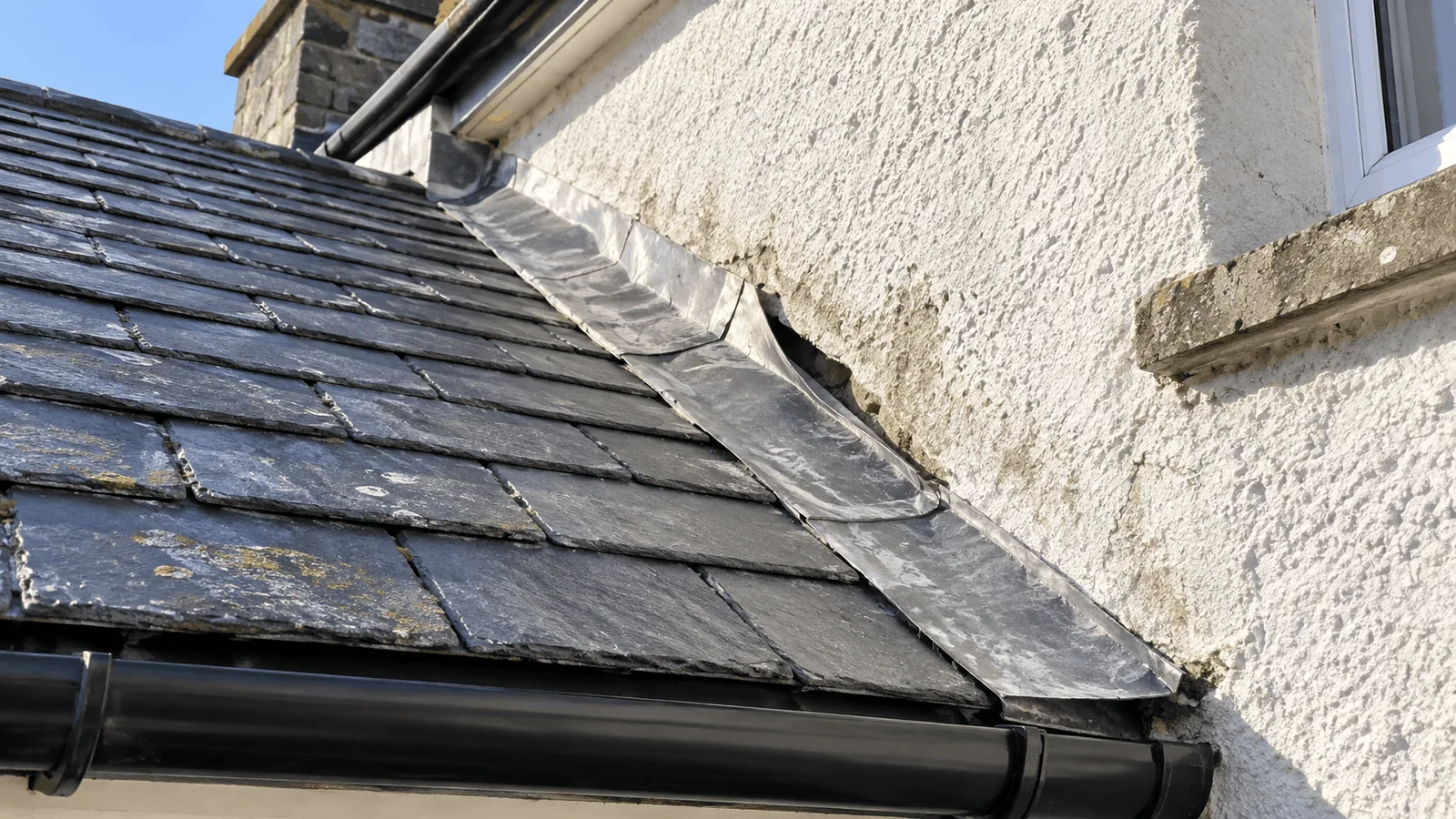
Roof flashing is a waterproofing component designed to protect areas where different roofing surfaces or building elements meet.
These junctions are naturally vulnerable because they interrupt the roof's normal drainage path.
Flashing helps direct rainwater over vulnerable joints and away from the building.
Common locations include:
- Roof-to-wall junctions
- Chimney bases and sides
- Roof valleys
- Dormer windows
- Skylights
- Certain roof edge details
- Junctions between existing roofs and extensions
Flashing may be made from lead, aluminium, zinc, or other compatible materials.
Different roof types require different detailing, so the correct material and installation method depend on the specific junction.
For homeowners dealing with deteriorated roof junctions, Aztech Roofing's Lead Work & Flashing service is a relevant starting point.
7 Common Reasons Why Roof Flashing Leaks
If you're asking why does flashing leak, these are seven common causes worth investigating.
1. Poor Flashing Installation
Incorrect installation is a major cause of premature flashing problems.
Flashing must be positioned to work with the roof's drainage pattern.
Common installation defects include:
- Incorrect overlaps
- Inadequate fixing
- Unsuitable materials
- Poorly formed junctions
- Insufficient allowance for movement
These mistakes may allow rainwater beneath the flashing rather than directing it away.
Prevention tip: Use roofing professionals familiar with the requirements of the particular flashing system.
2. Cracked or Split Flashing
Flashing materials can crack because of age, movement, physical damage, or unsuitable installation.
Metal flashing may become stressed if it cannot expand and contract naturally.
Even a small split can create a route for water to enter during heavy rainfall.
Prevention tip: Arrange an inspection if you notice cracks, holes, or unusual distortion.
3. Loose or Displaced Flashing
Strong winds, deteriorated fixings, and movement can cause flashing to lift or pull away from surrounding surfaces.
Once an edge becomes exposed, wind-driven rain may enter behind it.
This is particularly concerning around chimneys and roof-to-wall junctions.
Prevention tip: Investigate visibly loose flashing before the next period of severe weather.
4. Failed Mortar or Sealant Joints
Some flashing systems use joints where metal is secured into masonry.
If mortar or suitable joint sealants deteriorate, gaps may develop.
However, applying a fresh layer of sealant isn't always a reliable long-term solution.
The underlying flashing detail may need to be corrected.
Aztech Roofing's guide to Roof Flashing Repairs explains common defects and why the correct repair method matters.
5. Thermal Expansion and Building Movement
Roofing materials expand and contract as temperatures change.
Buildings also experience small amounts of movement over time.
If flashing is installed too rigidly, this movement may cause stress around joints and fixings.
The result can be cracking, distortion, or separation from adjacent materials.
Prevention tip: Ensure flashing is designed and installed to accommodate normal movement.
6. Blocked Drainage and Water Buildup
Leaves, moss, and debris can obstruct roof valleys, gutters, and other drainage routes.
When water cannot drain freely, it may collect around vulnerable roof junctions.
Prolonged water exposure can reveal weaknesses in flashing overlaps or surrounding roofing materials.
Prevention tip: Keep drainage routes clear and investigate repeated overflow during heavy rainfall.
7. Wind-Driven Rain
Rain doesn't always fall straight down.
During storms, strong winds can push water beneath loose flashing edges or poorly formed overlaps.
A junction that appears watertight during light rainfall may leak during severe weather.
Heavy rain often exposes an existing defect rather than creating a completely new problem.
Prevention tip: Arrange an inspection if leaks occur repeatedly during windy conditions.
Why Does Flashing Leak Where the Roof Meets a Wall?
Roof-to-wall junctions are particularly vulnerable because they connect two different building surfaces.
The roof covering must drain water safely while the flashing protects the point where it meets the wall.
Problems can develop when:
- Flashing pulls away from masonry.
- Mortar joints deteriorate.
- The flashing doesn't overlap the roof covering correctly.
- Building movement affects the junction.
- Rainwater becomes trapped behind unsuitable detailing.
These problems are common considerations around extensions, dormers, and adjoining roof sections.
Aztech Roofing's guide to Roofing for Home Extensions explains why roofing junctions need careful planning when connecting new construction to an existing property.
Can Roof Edge Flashing Cause Water Damage?
Yes, defective weatherproofing around roof edges can contribute to water entering the building.
However, not every roof edge uses traditional metal flashing.
Some roof systems rely on specialised verge details, edge trims, or other compatible components.
The correct waterproofing arrangement depends on the roof covering and construction.
When these details become loose, damaged, or incorrectly installed, rainwater may reach vulnerable areas beneath the roof covering.
Water may then travel along roofing underlay or structural components before appearing indoors.
How Can You Tell If Roof Flashing Is Leaking?
Flashing leaks aren't always easy to identify from inside the property.
Water can travel away from the original entry point before becoming visible.
Look for these warning signs:
- Brown or yellow ceiling stains
- Damp patches near external walls
- Water marks around chimney breasts
- Mould or persistent musty smells
- Loose or distorted flashing
- Visible gaps around roof junctions
- Leaks that appear during wind-driven rain
These symptoms can also result from broken tiles, defective guttering, or other roof problems.
Aztech Roofing's guide to the Common Causes of Roof Leaks explains other potential sources of water entry.
How Do You Repair Leaking Roof Flashing?
The correct repair depends on the flashing material, location, and extent of the defect.
A professional roofer should assess the cause before recommending a solution.
Temporary sealant repairs may reduce water entry in some situations, but they shouldn't automatically be treated as permanent fixes.
For homeowners experiencing recurring leaks, Aztech Roofing's Roof Repairs service provides information about addressing roofing defects.
How Much Does It Cost to Fix Leaking Flashing?
Repair costs depend on the location, materials, access requirements, and extent of the damage.
Several factors influence the price:
- Flashing material: Lead and other metals have different repair requirements.
- Location: Chimneys and high-level junctions may be harder to access.
- Damage severity: Small repairs generally involve less work than replacing extensive flashing.
- Roof complexity: Steep or awkward roofs may require additional labour.
- Scaffolding: Safe access equipment can affect the total cost.
- Associated damage: Tiles, mortar, underlay, or roof timbers may also need attention.
A detailed inspection can help establish whether a targeted repair or replacement is the more practical option.
How Can You Prevent Roof Flashing Leaks?
Preventing flashing leaks starts with recognising defects before they cause serious water damage.
Follow these practical steps:
- Check visible junctions: Look for lifting edges, cracks, and gaps from a safe location.
- Maintain drainage: Keep gutters and roof valleys free from significant debris.
- Address damaged masonry: Deteriorated joints around chimneys and walls may need repair.
- Investigate recurring damp: Don't assume water stains will disappear on their own.
- Arrange professional inspections: Have suspicious flashing defects assessed promptly.
Avoid climbing onto the roof to inspect or repair flashing yourself.
Working at height presents serious risks, particularly on steep or wet roofing surfaces.
If you're concerned about your roof's condition, Aztech Roofing's Free Roof Inspections page provides a starting point for arranging an assessment.
Key Takeaways
So, why does flashing leak around roof edges and walls?
The most common causes involve damaged materials, incorrect installation, failed joints, or movement that compromises the roof's waterproofing.
- Flashing protects vulnerable roof junctions from rainwater.
- Poor installation and incorrect overlaps can create leak paths.
- Cracks, loose sections, and deteriorated joints are important warning signs.
- Roof-to-wall junctions require careful detailing, particularly around extensions.
- Heavy rain and strong winds can expose existing weaknesses.
- Many localised flashing defects can be repaired without replacing the entire roof.
- Professional inspections help identify the actual cause before repairs begin.
If you're experiencing damp patches or suspect damaged flashing, Aztech Roofing can help you explore suitable inspection and repair options.
Good flashing keeps rainwater moving in the right direction—away from your home, not through it.
FAQs
Why does flashing leak around roof edges and walls?
Flashing can leak when it becomes cracked, displaced, incorrectly installed, or separated from surrounding materials. Failed joints and building movement may also create openings for rainwater. A professional inspection can identify the specific defect and appropriate repair.
Can leaking roof flashing be repaired without replacing the roof?
Yes, many localised flashing problems can be repaired without replacing the entire roof. Repairs may involve refitting loose sections, renewing joints, or replacing damaged flashing components. Extensive deterioration or unsuitable installation details may require more substantial work.
Why does roof flashing leak only during heavy rain?
Heavy rain increases the volume of water flowing across roof junctions. Strong winds may also push rainwater beneath loose flashing edges or defective overlaps. These conditions often expose an existing waterproofing problem that isn't noticeable during lighter rainfall.
How long should roof flashing last?
Flashing lifespan depends on the material, installation quality, weather exposure, and maintenance. Properly installed lead flashing can remain serviceable for many decades, while other materials have different expected lifespans. Visible damage and recurring leaks are more useful warning signs than age alone.
Should I get a roof inspection if I suspect flashing damage?
Yes, an inspection can help identify loose flashing, failed joints, and other roofing defects before they cause further damage. Water stains may originate from several different roof areas, so locating the actual source is important. A professional roofer can recommend whether repair or replacement is necessary.
Related reading
Explore local roofing help
A guide cannot diagnose a specific roof. Explore our services and local coverage, or arrange a free inspection.
Need advice on your roof?
Start with a free inspection and a clear explanation of the options.